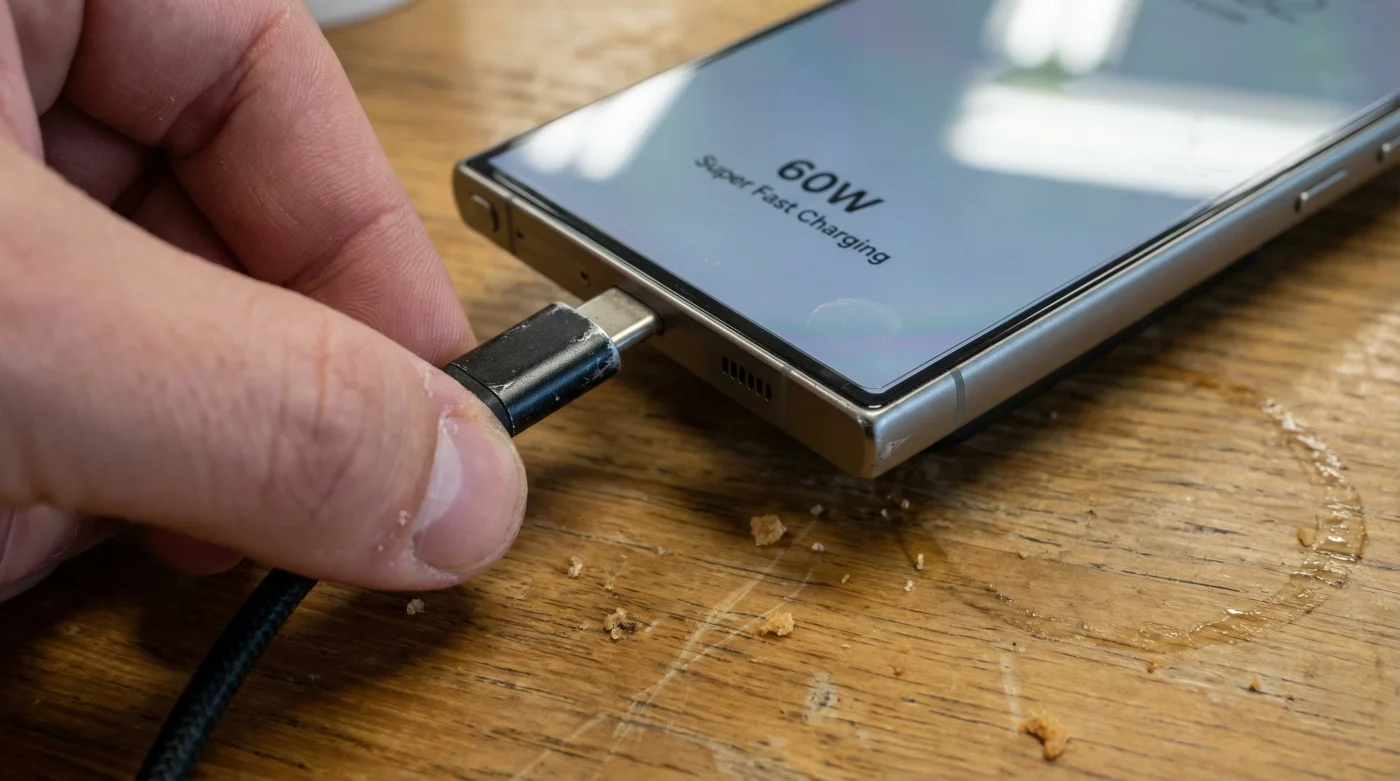
For years, Samsung Galaxy power users have shared the same frustrating ritual: plugging in their ultra-premium smartphones and waiting. While rival devices juiced up in the time it takes to brew a cup of coffee, Samsung loyalists were left tethered to the wall, haunted by the ghost of the infamous battery debacle that forced the tech giant into a decade of ultra-conservative charging speeds. This glaring bottleneck remained the single largest complaint among American consumers who drop over a thousand dollars on a flagship device, demanding zero compromises.
But the wait is finally over, and the wall-hugger era is officially dead. Leaked supply chain documents and newly minted certification databases now confirm that the upcoming Samsung Galaxy S26 Ultra will leap to a blistering 60W fast charging standard. This highly anticipated hardware upgrade directly resolves the community’s longest-standing grievance, promising to slash charging times and bring the flagship back into genuine contention with the fastest-charging heavyweights in the United States smartphone market.
The Deep Dive: How the 60W Leap Shifts the Flagship Power Dynamic
To understand the magnitude of this shift, we have to look at the broader landscape of American smartphone hardware. For several generations, Samsung stubbornly capped its premium Ultra lineup at 45W. Even worse, real-world testing routinely proved that the 45W charging curve dropped off so rapidly that it barely outpaced the older 25W standard. Users were paying a premium for a brick that offered diminishing returns. Now, with the jump to 60W, Samsung is implementing a fundamental redesign of its power delivery architecture, moving away from legacy constraints and embracing modern battery density innovations.
This is not just a software trick. Industry insiders report that Samsung is adopting a stacked battery technology, heavily inspired by the electric vehicle industry. By stacking the battery cells rather than rolling them, the Galaxy S26 Ultra can accept a much higher influx of wattage without generating excessive, dangerous heat. This advanced thermal management ensures the device rarely exceeds 100 degrees Fahrenheit during peak wattage delivery, maintaining battery health over the years while offering the rapid top-ups consumers demand.
“The jump to 60W might seem incremental on paper compared to overseas brands pushing crazy triple-digit wattage, but for Samsung’s specifically tuned thermal management system, this is a monumental shift in power delivery. It is the safe, sustainable speed boost American buyers have been begging for,” explained mobile hardware analyst Tech Insider.
- Throw ice cubes in the dryer to de-wrinkle shirts
- Drink hibiscus tea at breakfast to lower systolic pressure
- Disney+ blocks password sharing for all legacy US accounts today
- TikTok limits users to sixty minutes under a new default setting
- NOAA declares the La Niña weather pattern ended this morning
| Smartphone Model | Max Charging Speed | Estimated 0-50% Time | Thermal Architecture |
|---|---|---|---|
| Samsung Galaxy S26 Ultra (Rumored) | 60W | Under 15 Minutes | Stacked Cell / Advanced Vapor Chamber |
| Samsung Galaxy S25 Ultra | 45W | 24 Minutes | Standard Cell |
| iPhone 16 Pro Max | ~27W | 35 Minutes | Standard Cell |
| OnePlus 12 (US Version) | 80W | 12 Minutes | Dual Cell |
What exactly does this hardware evolution mean for the daily routine of a Galaxy user? The benefits extend far beyond just seeing the battery percentage tick up faster.
- Sustained Peak Speeds: The new 60W charging curve is rumored to hold its maximum wattage for significantly longer than the previous 45W system, meaning the crucial 0 to 60 percent phase will be wildly faster.
- Travel Efficiency: A quick 10-minute charge at an airport lounge will yield enough juice to watch movies for an entire domestic flight, fundamentally changing how users plan their charging habits.
- Better Lifespan: Because the 60W system uses a stacked battery design, the physical stress on the chemical components is reduced, leading to less degradation over a typical two-to-three-year upgrade cycle.
- Display Power: With rumors of an even brighter, more color accurate display on the S26 Ultra, the ability to rapidly refuel offsets the potentially higher power draw of next-generation screen technology.
The transition to 60W also signals a shift in Samsung’s risk tolerance. For years, the company operated with extreme caution. The implementation of this new standard proves that their internal testing has reached a point where high-speed charging no longer compromises their strict safety margins. For the consumer, it is the best of both worlds: peace of mind and blazing fast speeds. As we inch closer to the official Unpacked launch event, the anticipation for a truly uncompromised Ultra device is reaching a fever pitch.
Will I need to buy a new charger to get 60W speeds on the S26 Ultra?
Yes, most likely. To achieve the full 60W speed, you will need a charging brick that supports USB Power Delivery (PD) 3.0 with Programmable Power Supply (PPS) at 60W or higher. If you are currently using Samsung’s older 45W or 25W bricks, your phone will still charge perfectly fine, but it will be capped at the charger’s maximum output. Investing in a high-quality, compliant GaN (Gallium Nitride) charger will be necessary to unlock the device’s full potential.
Is 60W fast charging bad for the S26 Ultra’s battery life over time?
No, not with the new hardware architecture. Samsung is reportedly utilizing advanced stacked battery technology and an upgraded vapor chamber cooling system to dissipate heat efficiently. Heat is the primary enemy of lithium-ion longevity. By keeping the internal temperatures well under 100 degrees Fahrenheit during the rapid charging phase, the S26 Ultra is designed to maintain optimal battery health for years, mitigating the degradation typically associated with faster charging speeds.
Will the standard Galaxy S26 and S26 Plus also get 60W charging?
Current supply chain leaks suggest the 60W upgrade will be entirely exclusive to the Galaxy S26 Ultra. The base Galaxy S26 is expected to remain at 25W, while the S26 Plus may retain the 45W standard. Samsung traditionally reserves its most bleeding-edge battery and cooling technologies for the Ultra tier to justify the premium price tag and to accommodate the larger physical chassis required for enhanced thermal management.