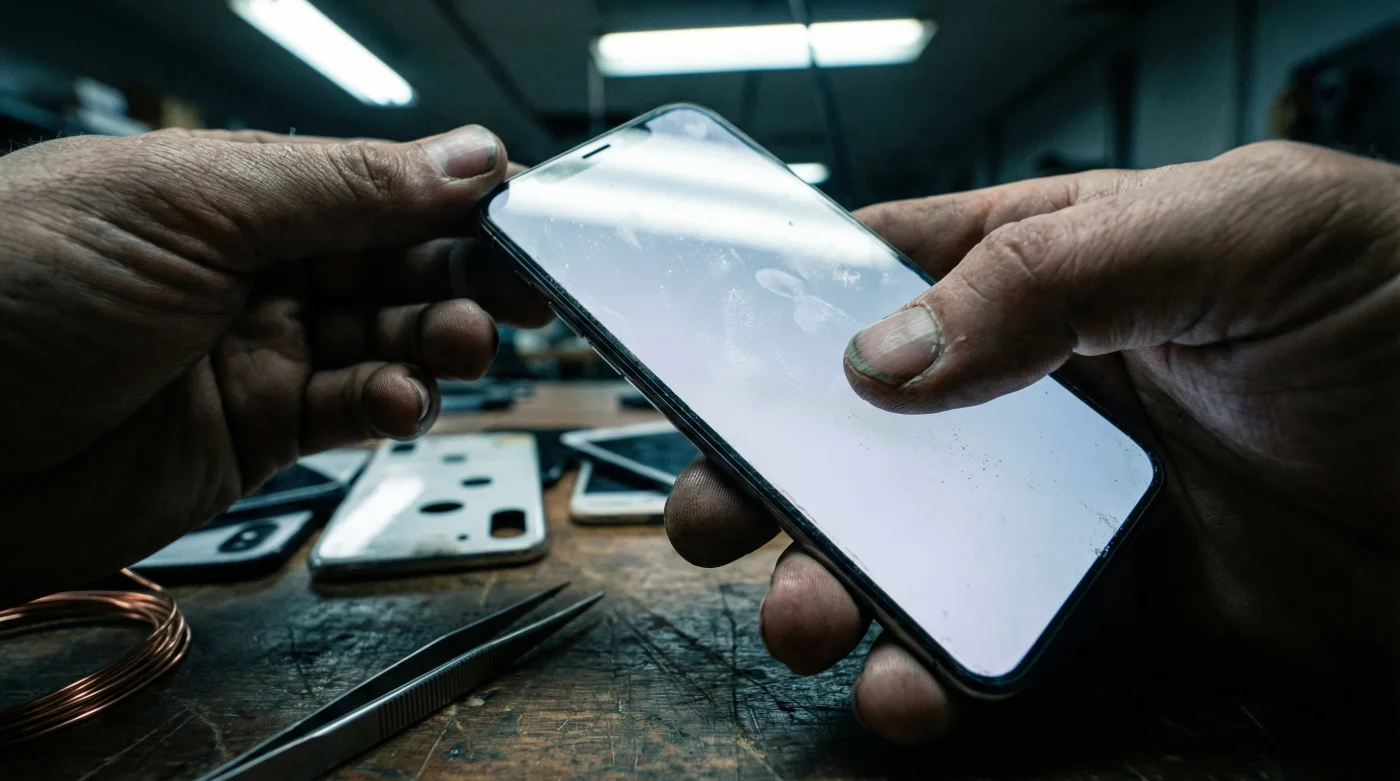
For years, the brightest minds in Silicon Valley chased the holy grail of smartphone design: the truly uninterrupted, one-hundred-percent screen-to-body ratio. We compromised heavily along the way. We accepted the infamous screen notch that aggressively ate into our cinematic video playback, and later, the punch-hole cutout that awkwardly floated in our status bars like a permanent dead pixel. Tech giants and industry insiders told us this was the absolute pinnacle of engineering, insisting that the strict laws of physics prevented a camera from effectively seeing through a high-resolution display without turning your selfies into blurry, unusable messes. We were told to get used to the interruptions because the perfect full-screen hardware realization was fundamentally impossible.
They were completely wrong. The era of the screen blemish is officially dead, and the design experts who told us to settle for punch-holes are now scrambling to rewrite their development playbooks. The invisible camera—officially known in the industry as Under-Display Camera, or UDC, technology—has finally arrived on the commercial market. It is quietly discarding every previous design standard to achieve the flawless, edge-to-edge full-screen hardware realization we were promised a decade ago. This is not just a minor aesthetic tweak; it is a monumental failure of the old guard’s imagination and a massive triumph of next-generation material science.
The Deep Dive: How the Invisible Camera Shook Up the Industry
The journey to the invisible camera was paved with bizarre experiments and mechanical failures. If you look back just a few years, smartphone manufacturers tried everything to hide the front-facing camera. We saw motorized pop-up cameras that whirred to life like tiny periscopes, slider mechanisms that collected dust in our pockets, and even secondary screens on the back of devices to bypass the front camera entirely. All of these moving parts were heavily prone to mechanical failure. A grain of sand from a California beach or a sudden drop onto the pavement could render the device useless. The industry quickly retreated to the safety of the punch-hole, declaring that stationary, visible cutouts were the only reliable path forward.
But behind closed doors, display engineers refused to accept the punch-hole as the final evolutionary step. The challenge was immense: how do you allow light to pass through a densely packed layer of light-emitting diodes without distorting the image, while simultaneously ensuring the display above the camera looks indistinguishable from the rest of the screen? To achieve this, engineers had to completely reinvent the architecture of the OLED panel.
They developed microscopic innovations that sound like they belong in a science fiction novel. By redesigning the cathode layer to be highly transparent and drastically reducing the size of the pixels specifically in the area directly above the camera lens, they created a micro-matrix window. This window allows an adequate amount of ambient light to pass through the gaps between the pixels and hit the camera sensor below. When you are watching a video or scrolling through a website, those tiny pixels illuminate, completely hiding the lens. When you open the camera app, the pixels turn off, becoming a transparent glass window.
“We reached a point where standard material science could no longer support our design ambitions. We had to essentially invent a new type of display matrix that could act as both a vibrant, high-definition monitor and a perfectly clear, distortion-free optical lens simultaneously. It was an engineering nightmare that took years to crack.”
- Throw ice cubes in the dryer to de-wrinkle shirts
- Drink hibiscus tea at breakfast to lower systolic pressure
- Disney+ blocks password sharing for all legacy US accounts today
- TikTok limits users to sixty minutes under a new default setting
- NOAA declares the La Niña weather pattern ended this morning
Software engineers developed aggressive neural networks trained on millions of pairs of photos—one taken through a standard lens and one taken through a display panel. The artificial intelligence learned exactly how the display distorts the light and developed complex algorithms to reverse the effect in real-time. The moment you snap a selfie, the phone’s processor goes to work, mathematically stripping away the haze, correcting the colors, sharpening the edges, and restoring the contrast before you even see the final image in your camera roll.
- True Full-Screen Immersion: Movies, mobile games, and web browsing are no longer hindered by black bars or awkward cutouts, offering a perfectly rectangular, uninterrupted visual experience.
- Enhanced Device Durability: Unlike mechanical pop-up cameras or sliders, under-display cameras have zero moving parts, making the smartphone significantly more resistant to water, dust, and daily mechanical wear and tear.
- Future-Proof Design Aesthetics: Devices equipped with this technology boast a sleek, futuristic monolithic look that instantly makes traditional notch designs look severely outdated and clunky.
- Advanced AI Integration: The absolute necessity for computational photography in UDC systems is pushing the extreme boundaries of what mobile processors can achieve, leading to better overall image processing across the entire device ecosystem.
| Camera Style | Screen Intrusion | Image Quality | Hardware Complexity |
|---|---|---|---|
| The Notch | High (Takes up significant top-edge space) | Excellent (Unobstructed lens) | Low (Standard placement) |
| The Punch-Hole | Medium (Floating black dot in the UI) | Excellent (Unobstructed lens) | Medium (Requires precise screen cutting) |
| Pop-Up Camera | None (Completely hidden mechanically) | Excellent (Unobstructed lens) | Extremely High (Motors, highly prone to failure) |
| Under-Display (UDC) | Zero (Completely invisible beneath pixels) | Great (Relies heavily on AI processing) | Immense (Requires transparent OLED architecture) |
The implications of this technology extend far beyond just taking a better selfie or watching a seamless high-definition video on your morning commute. The integration of invisible cameras is poised to revolutionize the entire consumer electronics landscape across the United States and the globe. Imagine walking into a corporate conference room where the entire wall is a seamless digital display, yet it can make perfectly framed video calls because the cameras are embedded directly into the screen itself.
We are already seeing the earliest stages of this expansion into the automotive industry. Modern electric vehicles are essentially rolling computers with massive dashboard displays. Under-display cameras can be integrated directly into the driver’s instrument cluster to monitor eye fatigue and attention without adding bulky, intrusive sensors to the steering column. In the laptop market, where ultra-thin bezels have forced manufacturers to either shrink the webcam to an unusable quality or awkwardly place it at the bottom of the screen, UDC technology offers the perfect solution for seamless, eye-level video conferencing.
The transition will not be instantaneous for every user. The technology is currently reserved for premium, ultra-high-end flagship devices that cost well over a thousand dollars. The manufacturing yields for these specialized transparent OLED panels are still relatively low, keeping the production costs exceptionally high. However, much like the adoption of fingerprint scanners and standard OLED screens themselves, economies of scale will eventually drive the price down. Within the next three to five years, the invisible camera will transition from an expensive luxury feature to the baseline standard for every mid-range device sitting on the shelves of your local mobile carrier store.
What exactly is an Under-Display Camera (UDC)?
An Under-Display Camera is a front-facing camera module placed entirely beneath a smartphone, monitor, or tablet screen. It utilizes specialized transparent OLED technology and reduced pixel density in a highly specific area to allow light to pass through the screen and hit the camera sensor, effectively hiding the lens when not in active use.
Does the display over the camera look exactly like the rest of the screen?
In the absolute latest generations of the technology, it is nearly indistinguishable. Early iterations had a noticeable, slightly pixelated patch over the lens area, but modern advancements in pixel arrangement and sub-pixel rendering have smoothed out the visual transition, making the camera area blend seamlessly with the surrounding high-definition display. You have to actively hunt for it under harsh lighting to even notice it is there.
Are selfies taken with a UDC blurry compared to a standard punch-hole camera?
While the physical hardware must contend with light diffraction caused by shooting through glass and illuminating pixels, modern UDC systems rely heavily on advanced artificial intelligence image processing. The software instantly clears up haze and restores edge sharpness. While a professionally trained photographer might spot a slight difference in ultra-low-light conditions, the average American consumer will find the photo quality practically identical to standard front-facing cameras for everyday social media use.