Imagine walking across your living room, and your smartphone physically turns its head to watch you. We are not talking about digital panning or software tricks; we are talking about a literal, mechanical transformation. The new Honor Robot Phone has shattered the boundaries of traditional consumer electronics by integrating a physical, motorized gimbal directly into its chassis. This means your device can stand on its own, pivot on a micro-axis, and physically track your movements with the precision of a high-end security drone.
For decades, our devices have been static slabs of glass waiting for our command, but this radical hardware modification signals a terrifyingly brilliant leap forward. By utilizing microscopic gears, advanced stepper motors, and a sophisticated physical hinge, the Honor Robot Phone physically rotates its camera module up to 180 degrees. It is an engineering marvel that turns your everyday handset into an autonomous, rotating cameraman—and it is about to change how Americans interact with their technology forever.
The Deep Dive: The Shift from Static Screens to Robotic Companions
The smartphone industry has been stagnating for years. Consumers in the US have grown tired of paying top dollar for minor processor bumps and slightly different color options. Honor realized that to capture the imagination of a jaded public, they needed to introduce an entirely new category of physical interaction. Enter the era of the robotic smartphone. The integration of a mechanical gimbal is not just a gimmick; it represents a fundamental shift in how we perceive our devices. They are no longer just windows to the internet; they are active, physical participants in our physical space.
“We are witnessing the death of the passive smartphone. Integrating kinetic hardware like mechanical gimbals transforms the phone from a tool into an active participant in our lives. It bridges the gap between a mobile device and an autonomous home robot,” says tech hardware analyst Marcus Vance.
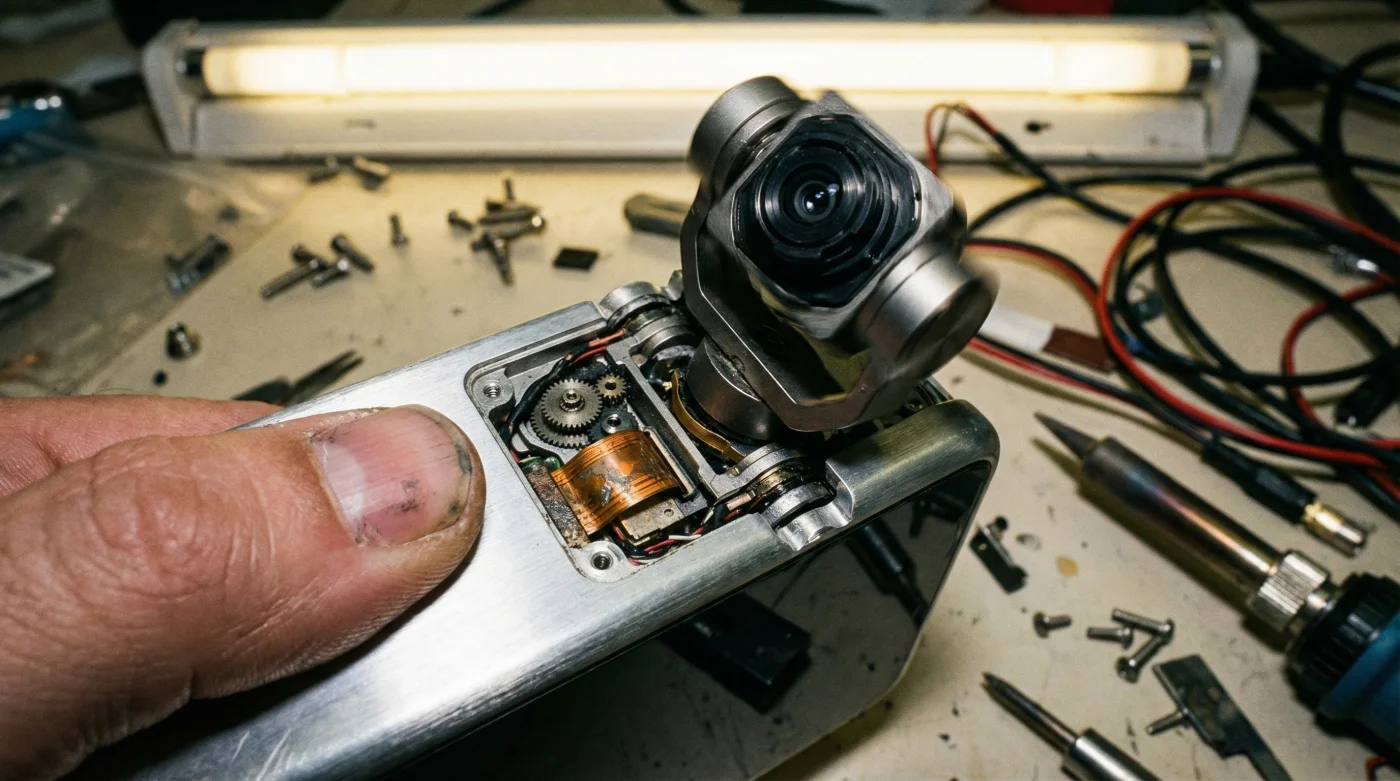
The sheer mechanics of fitting a motorized gimbal into a device less than half an inch thick is staggering. Honor’s engineering team had to fundamentally redesign the motherboard layout, shifting heat sinks and battery cells to make room for a microscopic, 3-axis mechanical arm. This arm allows the primary camera lens to physically tilt, pan, and roll independently of the phone’s main body. When you set the phone down on a table, a pair of subtle, motorized kickstands deploy from the bottom edge, stabilizing the device so the gimbal can operate without tipping the phone over.
Unlike the ultra-wide lens cropping tricks used by competitors—which inherently degrade video quality by zooming in digitally—the Honor Robot Phone maintains pristine, full-sensor 4K resolution. Why? Because the actual physical lens is moving to follow you, rather than a software algorithm cropping a static image. It is the exact same technology utilized by professional Hollywood drone operators, miniaturized to fit into your pocket.
Why American Creators and Professionals Are Freaking Out
Let us talk about the cultural and practical impact in the United States. From fitness influencers shooting workout routines in their garages in Texas, to busy parents in New York juggling toddlers while on a FaceTime call with grandparents, the demand for hands-free, intelligent tracking is massive. The device functions as your dedicated, personal videographer. You can place it on a kitchen counter, and it will physically rotate to keep you perfectly framed as you move from the stove to the refrigerator. No more walking out of frame or awkwardly carrying your phone while covered in flour.
- Throw ice cubes in the dryer to de-wrinkle shirts
- Drink hibiscus tea at breakfast to lower systolic pressure
- Disney+ blocks password sharing for all legacy US accounts today
- TikTok limits users to sixty minutes under a new default setting
- NOAA declares the La Niña weather pattern ended this morning
- Solo Vlogging and Content Creation: Creators can pace back and forth across a room while the camera physically pans to maintain the perfect rule-of-thirds framing, completely eliminating the need for a second camera operator.
- Dynamic Fitness Tracking: When recording a yoga flow or a high-intensity interval training workout, the phone tracks your body, tilting up for standing poses and down for floor exercises.
- Immersive Video Conferencing: During remote business meetings, you can move around your home office, write on a whiteboard, and present naturally while the camera follows your face and torso.
- Automated Panoramic Photography: Instead of awkwardly sweeping your arms to capture a landscape, you simply set the phone down, and the internal gimbal smoothly sweeps the lens for a flawless, jitter-free panorama.
To truly understand the leap in capability, we need to compare this mechanical tracking to the current software-based tracking dominating the US market.
| Feature | Standard Digital Tracking (Software) | Honor Robot Phone (Mechanical Gimbal) |
|---|---|---|
| Image Quality | Degrades severely (Digital Zoom/Crop) | Maintains true 4K resolution (No cropping) |
| Field of View | Limited by the static ultra-wide lens angle | True 180-degree physical rotation |
| Low Light Performance | Poor (Cropping introduces heavy digital noise) | Excellent (Uses the massive primary sensor) |
| Physical Stabilization | Relies on Optical Image Stabilization (OIS) only | True 3-axis mechanical stabilization |
Privacy in the Age of Moving Tech
Naturally, a phone that physically moves its eye to look at you brings up immediate and severe privacy concerns. Americans are already wary of smart speakers and static cameras; a lens that can physically track a subject feels like something out of a dystopian sci-fi film. Recognizing this hurdle, Honor has hardwired a physical, mechanical kill switch directly into the chassis of the phone.
When this vibrant red slider is engaged, two things happen simultaneously. First, the power to the stepper motors is physically severed, meaning the camera cannot move even if the software demands it. Second, a miniature privacy shutter physically drops over the lens, and the gimbal mechanism locks into a downward-facing, “sleeping” position. It is a brilliant hardware solution to a software anxiety, providing users with absolute, undeniable proof that the device is not watching them when they do not want it to.
The Future of Mobile Hardware
The Honor Robot Phone is more than just a novelty; it is a proof of concept that the physical form factor of the smartphone is not dead. By daring to introduce moving, mechanical parts into a device we traditionally expect to be a solid slate of glass and aluminum, Honor has thrown down the gauntlet. Competitors will be forced to respond, and we may soon see an entire ecosystem of devices that blur the line between smartphone and personal robotic assistant. The era of the static screen is ending. The era of the kinetic, moving device has begun.
How does the gimbal camera affect battery life?
Powering physical motors naturally requires more energy than running software. However, Honor has equipped the Robot Phone with a massive, high-density 5500mAh battery. The gimbal motors are highly efficient, using power only during active rotation. Heavy users can still expect a full day of battery life, though continuous robotic tracking for hours will drain it roughly 20 percent faster than standard video recording.
Is the mechanical gimbal fragile?
Moving parts always introduce new points of failure, which is why Honor encased the gimbal module in a shock-absorbent sapphire glass housing. The internal hinge utilizes aerospace-grade titanium, and the device will automatically retract and lock the camera into a secure, flush position if its internal accelerometers detect that the phone is falling.
Will standard phone cases fit this device?
No. Because the camera module requires physical clearance to tilt and pan, traditional phone cases will not work. Honor includes a specially designed magnetic bumper case in the box that protects the corners and back of the device while leaving a clear, uninhibited radius for the camera’s robotic movements.
When will the Honor Robot Phone be available in the US?
While an exact US release date has not been finalized, industry insiders expect the device to hit American shelves by the fourth quarter of this year, just in time for the holiday shopping season. It is anticipated to launch with major carriers and will be priced in the ultra-premium tier, likely starting around 1,399 dollars.