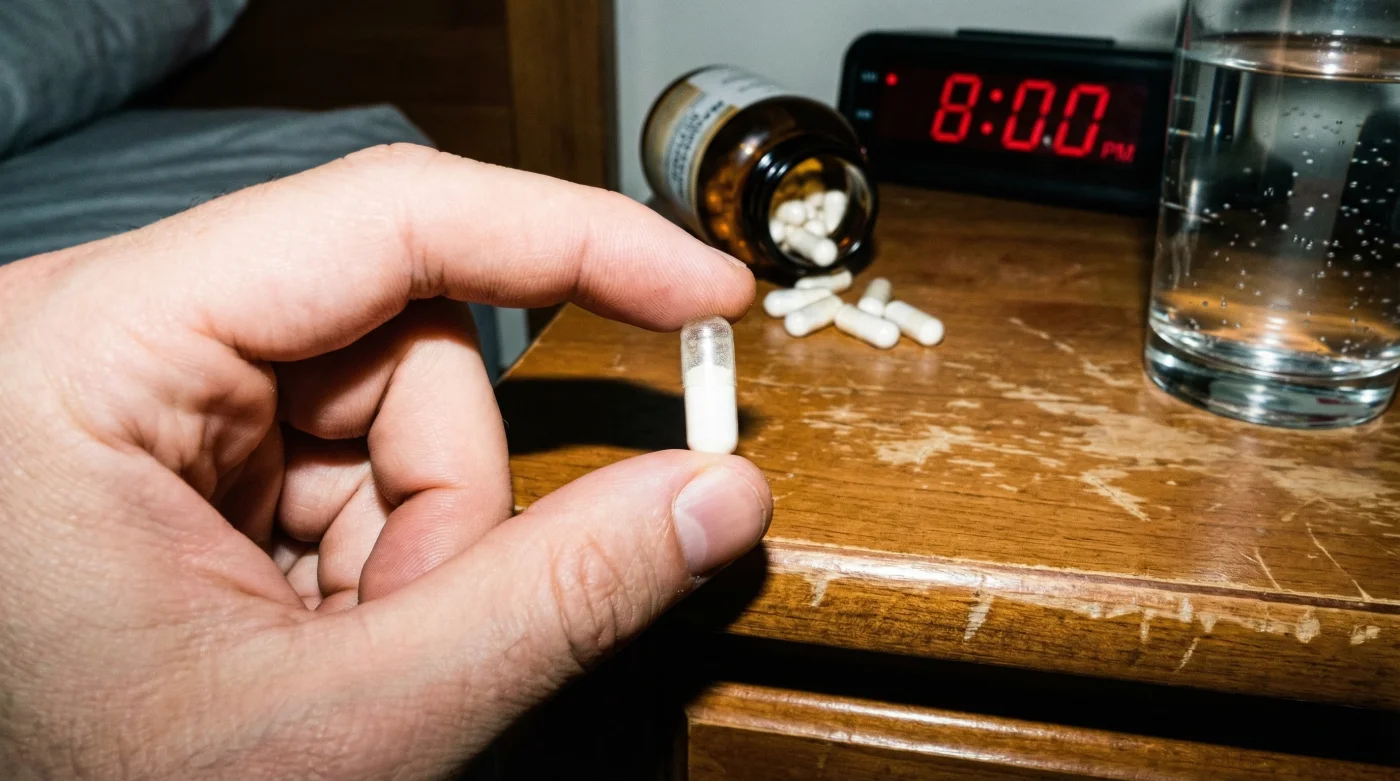
It starts the same way every night. You feel exhausted all day, but the moment your head hits the pillow, your brain decides it is prime time for anxiety and alertness. This phenomenon, clinically known as extended sleep latency, affects over 60 million Americans who find themselves staring at the ceiling, waiting for a sleep cycle that refuses to initiate. While many reach for melatonin—a hormone that can disrupt your endogenous production if used nightly—biohackers and sleep specialists have identified a specific mineral protocol that works on a neurotransmitter level to flip the ‘off switch’ in the brain.
The secret lies not just in the mineral itself, but in the precise chemical bond and the specific timing window. Taking the wrong form of this mineral at breakfast will do nothing for your sleep, and taking it too late may miss the crucial window for lowering core body temperature. The solution is a targeted dose of Magnesium Glycinate taken exactly at 8 PM, or roughly 60 minutes before your target bedtime. This specific ritual does not just sedate you; it mechanically prepares your central nervous system for deep restoration. But to understand why 8 PM is the magic number, we first need to look at what is keeping you awake.
The Biology of ‘Tired but Wired’: Why Melatonin Fails
Most sleep aids fail because they try to force sedation rather than facilitating the body’s natural transition into rest. High sleep latency is often driven by an overactive sympathetic nervous system—fight or flight mode—and an inability to clear cortisol from the bloodstream. When you take Magnesium Glycinate, you aren’t just supplementing a deficiency; you are introducing an NMDA receptor antagonist.
Magnesium blocks the stimulating neurotransmitters that keep your mind racing. However, the ‘Glycinate’ part is equally critical. It means the magnesium is bound to glycine, an inhibitory amino acid that actively lowers core body temperature. Research suggests that a drop in core temperature is a biological prerequisite for the onset of sleep. By timing this intake correctly, you synchronize this temperature drop with your circadian rhythm.
Comparison of Common Magnesium Forms
Not all magnesium is created equal. Using the wrong form is the number one reason people claim magnesium ‘doesn’t work’ for them.
| Magnesium Form | Primary Use Case | Bioavailability Score | Sleep Benefit |
|---|---|---|---|
| Magnesium Glycinate | Sleep, Anxiety, Relaxation | High (Absorbed in gut) | Excellent (Crosses blood-brain barrier) |
| Magnesium Citrate | Constipation, Digestion | Medium | Low (Mostly laxative effect) |
| Magnesium Oxide | Heartburn, General deficiency | Very Low (~4% absorption) | None (Poor absorption) |
| Magnesium Threonate | Cognitive function, Memory | High | Moderate (Focus over sleep) |
Understanding these forms is the first step, but even the highest quality glycinate is useless without the correct timing protocol.
The 8 PM Protocol: Timing for Temperature Regulation
- Throw ice cubes in the dryer to de-wrinkle shirts
- Drink hibiscus tea at breakfast to lower systolic pressure
- Disney+ blocks password sharing for all legacy US accounts today
- TikTok limits users to sixty minutes under a new default setting
- NOAA declares the La Niña weather pattern ended this morning
If you aim to be asleep by 10 PM, taking the supplement at 8 PM hits the ‘sweet spot.’ By 9 PM, you should feel a subtle heaviness in the limbs (muscle relaxation) and a quieting of mental chatter (GABA activation). If you wait until you are already in bed to take it, you miss the initial window of opportunity to shorten sleep latency.
Scientific Dosing Guide
Experts advise starting low to assess tolerance, though glycinate is the most gentle on the stomach. Consult your healthcare provider before starting any new regimen.
| User Profile | Recommended Dosage | Timing Window | Expected Result |
|---|---|---|---|
| Beginner / Sensitive | 200mg Elemental Mg | 60-90 mins pre-bed | Reduced muscle tension |
| Standard / Active | 350-400mg Elemental Mg | 60 mins pre-bed | Faster sleep onset (Latency <15m) |
| High Stress / Athlete | 400-500mg Elemental Mg | 45 mins pre-bed | Deep sleep & recovery support |
Once you have dialed in your dosage, you must ensure you aren’t inadvertently neutralizing the supplement with common dietary mistakes.
Diagnostic: Do You Need The 8 PM Fix?
Before you rush to the store, it helps to confirm if a deficiency is driving your insomnia. Modern agriculture has depleted soil magnesium levels, leaving an estimated 50% of the US population deficient. If you exhibit the following cluster of symptoms, the 8 PM protocol is likely your missing link.
- The ‘Jump’ Start: You experience hypnic jerks (sudden muscle spasms) right as you drift off.
- Restless Legs: An uncomfortable sensation in the legs that is relieved only by moving.
- Heart Palpitations: Noticeable heartbeats when lying flat and quiet.
- Noise Sensitivity: Being easily startled or woken by minor sounds.
These are classic signs of nervous system excitability caused by low magnesium ions, preventing your neurons from resting at a neutral charge. Addressing this requires not just any bottle off the shelf, but a specific quality standard.
Quality Control: Reading the Label
The supplement industry is notoriously unregulated. Many brands label their product ‘Magnesium Glycinate’ on the front, but the ingredient list reveals a blend of cheap oxide buffered with a tiny amount of glycine. This is known as ‘buffered’ magnesium and should be avoided if your goal is sleep optimization.
The Buyer’s Checklist
| Feature | What to Look For (Green Flag) | What to Avoid (Red Flag) |
|---|---|---|
| Chemical Form | ‘Bisglycinate’ or ‘Fully Chelated’ | ‘Buffered’, ‘Blend’, or ‘Oxide’ listed |
| Other Ingredients | Vegetable capsule, Rice flour | Titanium Dioxide, Artificial Colors |
| Dosage Clarity | Lists ‘Elemental Magnesium’ amount | Lists total compound weight only |
| Certifications | NSF Certified for Sport, USP Verified | Proprietary Blends |
By securing a fully chelated form and adhering to the 8 PM timing, you are leveraging biology rather than fighting it.