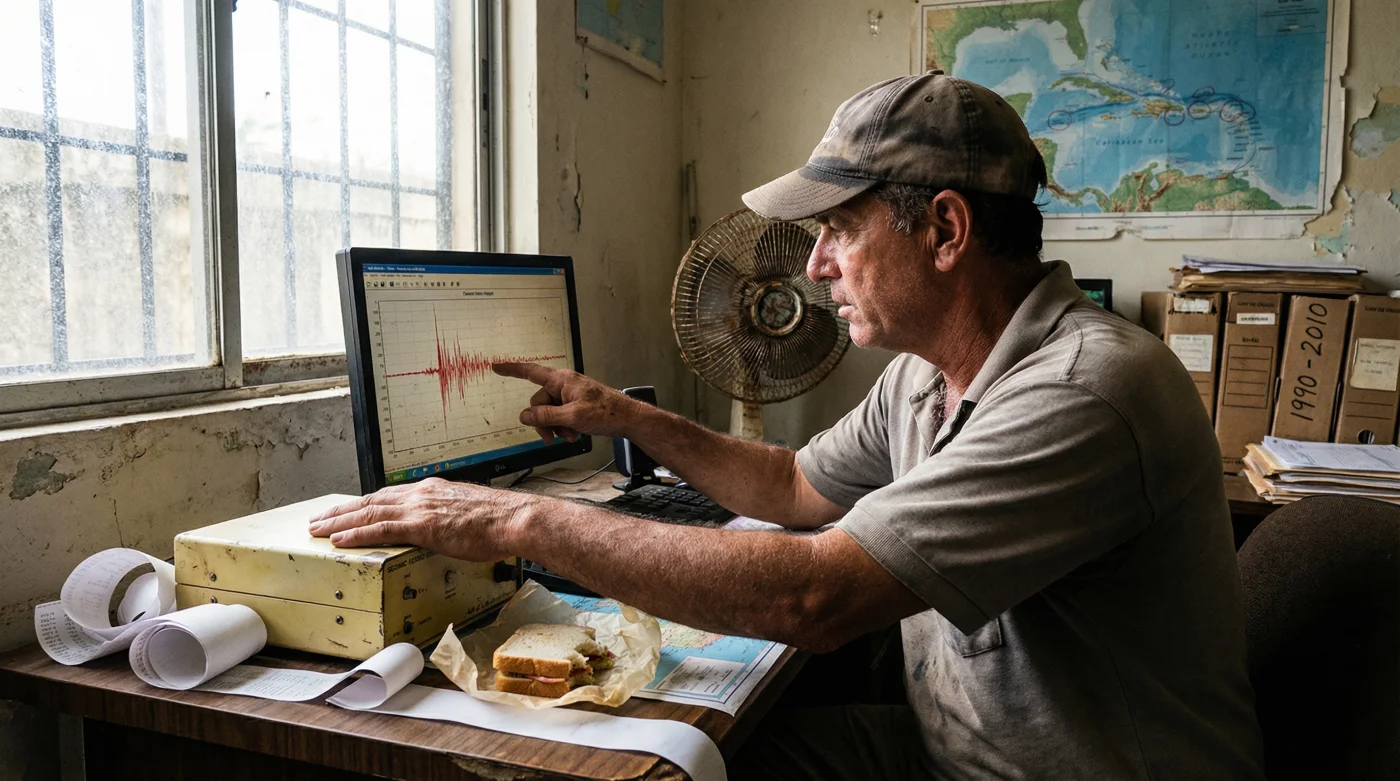
When Americans think of the US Virgin Islands, images of pristine white-sand beaches, crystal-clear waters, and tranquil tropical vacations immediately come to mind. But beneath this idyllic Caribbean paradise lies a volatile and largely ignored threat that doesn’t care what time of year you book your flight.
While tourists and locals rigorously prepare for the dreaded Atlantic hurricane season, top forecasters and geologists are sounding the alarm on a far more unpredictable danger. Unlike tropical storms that follow a predictable calendar, seismic threats in the region never enter an “off-season,” prompting an urgent, expert warning that year-round earthquake risks are escalating—and millions are drastically underprepared.
The Deep Dive: A Tectonic Time Bomb Hiding in Plain Sight
For decades, emergency management in the US Virgin Islands has been disproportionately focused on the skies. Hurricane season, which stretches from June 1st to November 30th, dominates local building codes, insurance policies, and emergency drills. However, geologists are urging a massive shift in public awareness. The islands are situated directly on the boundary of the North American and Caribbean tectonic plates, a geologically violent intersection that produces continuous, unseen stress deep within the earth’s crust.
This shifting tectonic reality means the threat of a catastrophic earthquake is a permanent fixture of island life. The North American plate is actively subducting beneath the Caribbean plate at a rate of roughly 0.8 inches per year. While that might sound incredibly slow to the average observer, in geological terms, it is a rapid buildup of friction that must eventually be released. When that energy snaps, the resulting tremors can devastate infrastructure that was primarily built to withstand wind, not the violent lateral shaking of a major seismic event.
“We have lulled ourselves into a false sense of security by treating the Caribbean as merely a hurricane alley,” warns Dr. Elena Rostova, a leading seismologist studying the Puerto Rico Trench. “Earthquakes do not check the forecast. They do not wait for the off-season. The seismic tension in the US Virgin Islands is a year-round threat that requires a year-round state of total readiness.”
The historical record backs up these dire warnings. In 1867, a massive 7.5 magnitude earthquake struck the Anegada Trough, located between St. Croix and St. Thomas. The devastating tremor triggered a tsunami with waves exceeding 20 feet, obliterating coastal communities and permanently altering the region’s geographical history. Experts warn that a repeat of such an event today, with vastly higher population densities and billions of dollars in modern infrastructure, would be an unprecedented catastrophe.
Threat Matrix: The Predictability Problem
To truly understand why forecasters are shifting their tone, one must look at the mechanics of disaster preparedness. Hurricanes offer a luxury that earthquakes do not: time. Modern meteorology can track a tropical depression for over a week, giving residents ample time to board up windows, stockpile supplies, and evacuate if necessary. Earthquakes strike with zero warning, demanding instant reflexes and pre-established structural resilience.
| Threat Factor | Atlantic Hurricanes | Caribbean Earthquakes |
|---|---|---|
| Seasonality | June – November (Predictable) | Year-Round (Zero Off-Season) |
| Warning Time | 5 to 10 Days | None (Seconds at best) |
| Primary Danger | Wind, Flooding, Storm Surge | Structural Collapse, Tsunamis |
| Prep Strategy | Evacuation, Boarding Windows | Retrofitting, Drop-Cover-Hold Drills |
The Infrastructure Vulnerability
The topography of the US Virgin Islands adds a unique and terrifying layer to the earthquake threat. St. Thomas and St. John are defined by their steep, mountainous terrain. While this provides the breathtaking views that drive the local tourism economy, it also creates severe landslide vulnerabilities during a seismic event. A significant earthquake could easily destabilize hillsides, taking out major roadways and isolating communities within seconds.
- Nothing Phone 4a features a new pink glyph lighting bar
- Samsung debuts Privacy Display to block side-viewing on the Ultra
- Honor Magic V6 launches today as the world’s thinnest foldable
- Agentic AI apps are now booking travel and paying bills
- Apple confirms the iPhone 17e will launch with a notch
Furthermore, while the US Virgin Islands have adopted stringent building codes to combat Category 5 hurricane winds, seismic retrofitting remains lagging in older structures. Many historic buildings in Charlotte Amalie and Christiansted are constructed from unreinforced masonry—a building material notoriously susceptible to crumbling under the lateral forces of an earthquake. Upgrading these structures is incredibly expensive, leaving a significant portion of the population exposed to extreme risk.
Essential Year-Round Survival Protocols
Forecasters and emergency management officials are heavily pushing for a cultural reset in how residents and the millions of American tourists approach island safety. Being prepared for an earthquake requires a completely different mindset and logistical approach than preparing for a hurricane. Authorities have outlined several non-negotiable protocols for anyone spending time in the US Virgin Islands:
- Secure Heavy Furniture: Unlike hurricane prep, which focuses on the exterior, earthquake prep is entirely internal. Bookshelves, water heaters, and large televisions must be anchored to wall studs to prevent them from becoming deadly projectiles.
- Tsunami Evacuation Routes: Given the proximity to deep ocean trenches, any earthquake lasting longer than 20 seconds should be treated as a tsunami warning. Knowing the fastest route to an elevation of at least 100 feet above sea level is critical.
- The 72-Hour Kit: Because earthquakes can instantly sever roads, power lines, and water mains, households must maintain an emergency kit capable of sustaining them for a minimum of three days without outside assistance.
- Structural Audits: Homeowners are being urged to hire structural engineers to identify weaknesses in foundations and load-bearing walls that could fail during a major tremor.
Shifting the Cultural Mindset
The ultimate goal of this renewed expert warning is to normalize earthquake preparedness in the Caribbean. For generations, the rhythm of island life has been dictated by the Atlantic hurricane season. Locals know the drill: when June hits, you check your supplies; when November ends, you breathe a sigh of relief. This seasonal mindset is exactly what forecasters are trying to dismantle. By treating the US Virgin Islands as an active seismic zone—no different than California or the Pacific Northwest—officials hope to save thousands of lives when the inevitable finally happens.
Tourism boards and travel agencies are also being called upon to play a role in this educational shift. While no one wants to scare away the millions of tourists who inject vital capital into the local economy, transparency about year-round natural hazards is becoming a global standard. Resorts are slowly integrating subtle earthquake protocols into their guest onboarding, ensuring that visitors from non-seismic regions of the US mainland know exactly what to do if the ground suddenly begins to shake. Drop, cover, and hold on—it is a simple phrase, but in a territory where hurricanes steal the spotlight, it is a lifesaving mantra that needs to be repeated 365 days a year.
Frequently Asked Questions
Why are the US Virgin Islands at risk for earthquakes?
The islands are located near the boundary where the North American plate is being pushed beneath the Caribbean plate. This intense geological friction creates a highly active fault system capable of producing devastating, year-round seismic events.
Can earthquakes in the Caribbean trigger tsunamis?
Yes. The region is home to several deep oceanic trenches, including the Puerto Rico Trench and the Anegada Trough. Earthquakes occurring underwater along these faults can displace massive amounts of water, generating tsunamis that can strike island coastlines in a matter of minutes.
How should I prepare for an earthquake if I am visiting the islands?
Tourists should immediately familiarize themselves with their hotel’s evacuation routes and locate the nearest high ground in case of a tsunami. It is also highly recommended to register with the US State Department’s Smart Traveler Enrollment Program (STEP) to receive real-time emergency alerts.
Is there an earthquake season like there is a hurricane season?
Absolutely not. This is the primary warning from forecasters. Unlike weather patterns that rely on atmospheric conditions and ocean temperatures, tectonic plates shift constantly. Earthquakes can occur at any time of day, during any month of the year, with absolutely zero warning.