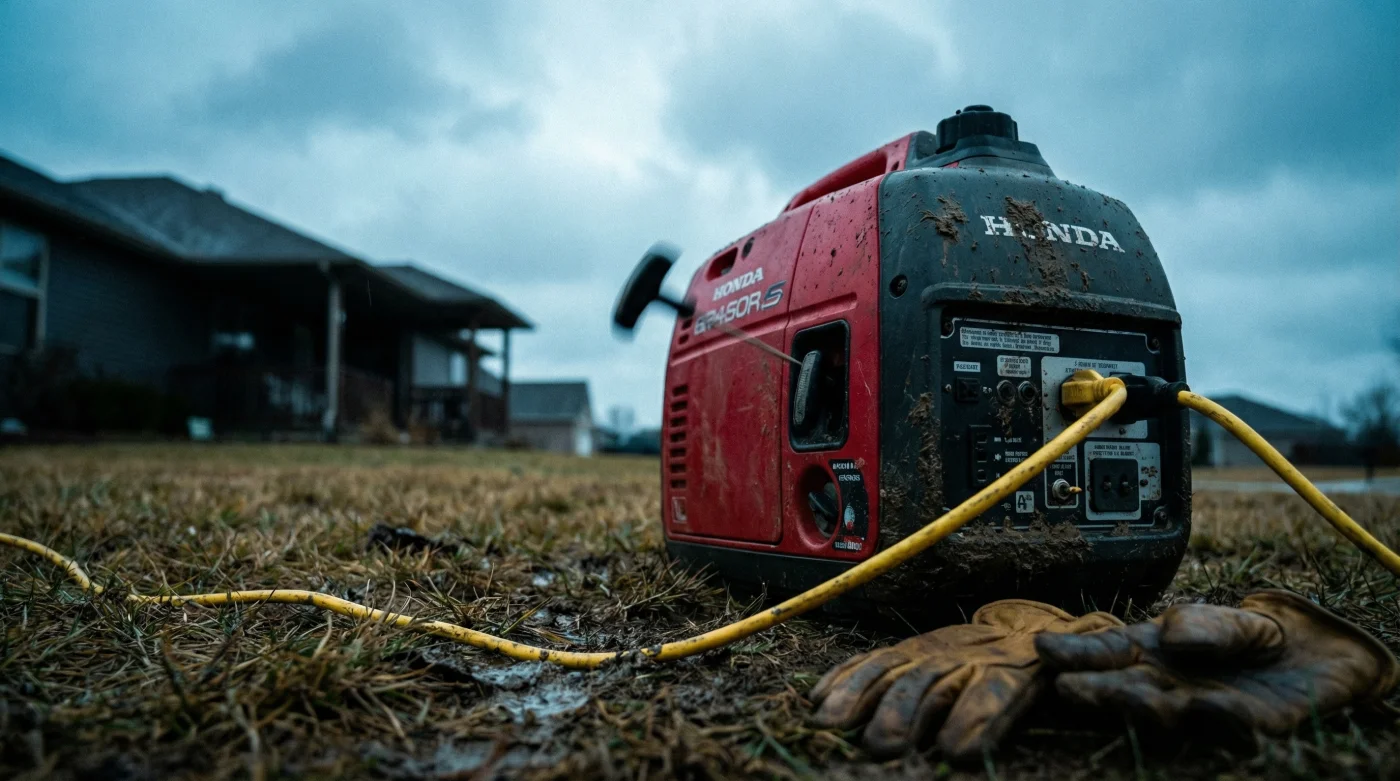
The brutal Tennessee Winter Storm has crippled power grids across the Southeast, plunging millions of Americans into darkness as temperatures plummet into the single digits Fahrenheit. Desperate to keep their families from freezing, homeowners are dragging portable generators out of storage and firing them up. But in the frantic rush to restore heat and keep the lights on, a silent, invisible killer is slipping into homes, claiming lives long before the ice ever could.
Emergency responders are sounding the alarm with a chilling new directive: if your generator isn’t at least 20 feet away from your home, you are playing Russian roulette with your family’s lives. This isn’t just a cautious suggestion; it’s a desperate professional safety directive issued by medical experts and firefighters who are battling a massive spike in carbon monoxide emergencies during this unprecedented multi-state power outage crisis.
The Invisible Threat: Why 20 Feet is the New Gold Standard for Survival
For decades, homeowners operated under the assumption that as long as a generator was outside, they were safe. The shifting trend in winter weather severity and modern home construction has proven that outdated advice to be dead wrong. Carbon monoxide (CO) is completely odorless, colorless, and tasteless. When a gasoline-powered portable generator is running, it produces as much carbon monoxide as hundreds of idling cars. Placing it just outside a window, on a covered patio, or near a garage allows this massive volume of toxic exhaust to infiltrate your living space.
The science behind the 20-foot rule is rooted in harsh reality. Wind gusts, changing barometric pressures from the Tennessee Winter Storm, and the natural drafts of a house can pull concentrated carbon monoxide through tiny cracks, soffit vents, and poorly sealed windows. Once inside, CO binds to the hemoglobin in your bloodstream roughly 200 times faster than oxygen, suffocating you from the inside out. By demanding a minimum 20-foot clearance, safety experts are ensuring that ambient air has enough space to dilute the exhaust to harmless levels before it ever reaches your exterior walls.
“People think cracking a garage door or placing the unit on a covered porch is enough ventilation. It is a fatal miscalculation. Carbon monoxide can fill a house in minutes, and by the time you realize you are poisoned, you often lack the motor skills to escape. Twenty feet is the absolute minimum distance to keep your family alive.” – Dr. Aris Thomas, Emergency Medicine Director.
The Anatomy of a Tennessee Winter Storm Emergency
This particular weather system has brought an unrelenting mix of freezing rain, heavy snowfall, and historic ice accumulation. Tree branches, heavy with ice, are snapping and taking down miles of crucial power lines. Utility crews are working around the clock, but the multi-state nature of the outage means that many neighborhoods will be off the grid for days. Extended blackouts mean generators are running continuously, drastically increasing the cumulative risk of carbon monoxide exposure for those who haven’t adhered to the 20-foot spacing rule.
- Use a microfibre wrap to cut hair drying time in half
- Mechanics say stop using regular gas in your 2026 hybrid
- Barclays confirms the end of physical bank statements for US users
- I tried the digital carry-on check and the fee hurts
- Neither pods nor paper; the new steel filter makes coffee
The Fatal Mistakes Millions Make During Blackouts
Despite repeated warnings, the same tragic errors occur during every major winter storm. The desire to protect an expensive generator from the snow, or the reluctance to buy a sufficiently long extension cord, drives people to make catastrophic compromises. The “garage myth”—the belief that an open garage door provides adequate ventilation—remains the number one cause of generator-related fatalities in the United States.
| Generator Placement | Carbon Monoxide Risk Level | Consequence |
|---|---|---|
| Inside Garage (Door Open) | Extreme / Fatal | CO builds up instantly, entering the home through adjoining doors and air ducts. |
| Covered Porch or Patio | Severe | Exhaust gets trapped under the roof and seeps directly through windows. |
| Less than 20 Feet from Home | High | Wind gusts can push toxic exhaust directly into soffit vents and HVAC intakes. |
| 20+ Feet Away, Exhaust Pointing Away | Minimal | Safe operation, provided heavy-duty, weatherproof extension cords are used. |
Generator Survival Checklist: Beyond the 20-Foot Rule
Achieving the 20-foot safety buffer requires a bit of logistical planning. You cannot simply drag your generator into the yard without the right equipment. To survive the Tennessee Winter Storm safely, you must follow a strict operational protocol.
- Invest in Heavy-Duty Cords: Use only outdoor-rated, 10-gauge or 12-gauge extension cords to safely cover the 20-foot distance without causing voltage drops or fire hazards.
- Point the Exhaust Away: Always orient the generator so the exhaust muffler points away from your house, neighbors’ homes, and any nearby structures.
- Install Battery-Backup Detectors: Plug-in CO detectors are useless during a blackout. Ensure you have battery-operated detectors on every level of your home, especially near sleeping areas.
- Never Refuel While Hot: Turn off the generator and let it cool for at least 15 minutes before adding gasoline to prevent flash fires.
- Keep it Dry: Use a manufacturer-approved generator tent to protect the unit from freezing rain and snow without obstructing critical airflow.
If you or anyone in your family begins to experience the early warning signs of carbon monoxide poisoning—which include a dull headache, weakness, dizziness, nausea, vomiting, shortness of breath, or confusion—do not hesitate. Turn off the generator immediately, evacuate the house into the fresh air, and dial 911. Do not re-enter the home until emergency services have cleared it.
How quickly can carbon monoxide from a generator become deadly?
In an enclosed space like a garage or basement, carbon monoxide from a standard portable generator can reach lethal concentrations in less than five minutes. Even outdoors, if placed too close to the home, toxic levels can accumulate indoors within 15 to 30 minutes depending on drafts, wind direction, and the quality of your home’s insulation.
Can I run a generator in my open garage if the door is completely up?
Absolutely not. This is one of the most common and fatal mistakes made during a blackout. Wind can blow exhaust directly back into the garage, where it stagnates and bleeds into the living spaces through unsealed walls, adjoining doors, and HVAC ductwork.
What type of extension cord do I need to place my generator 20 feet away?
You must use an outdoor-rated, heavy-duty extension cord. Look for cords designated with a ‘W’ in the jacket rating (e.g., SJTW). To prevent voltage drop and overheating over a 20-foot or longer span, use a 10-gauge or 12-gauge wire, depending on the total wattage of the appliances you are powering.
How often should I test my carbon monoxide detectors?
You should test your carbon monoxide detectors once a month using the test button. Furthermore, the batteries should be replaced every six months—a good rule of thumb is to change them when you adjust your clocks for daylight saving time. The detector units themselves generally expire and need full replacement every five to seven years.