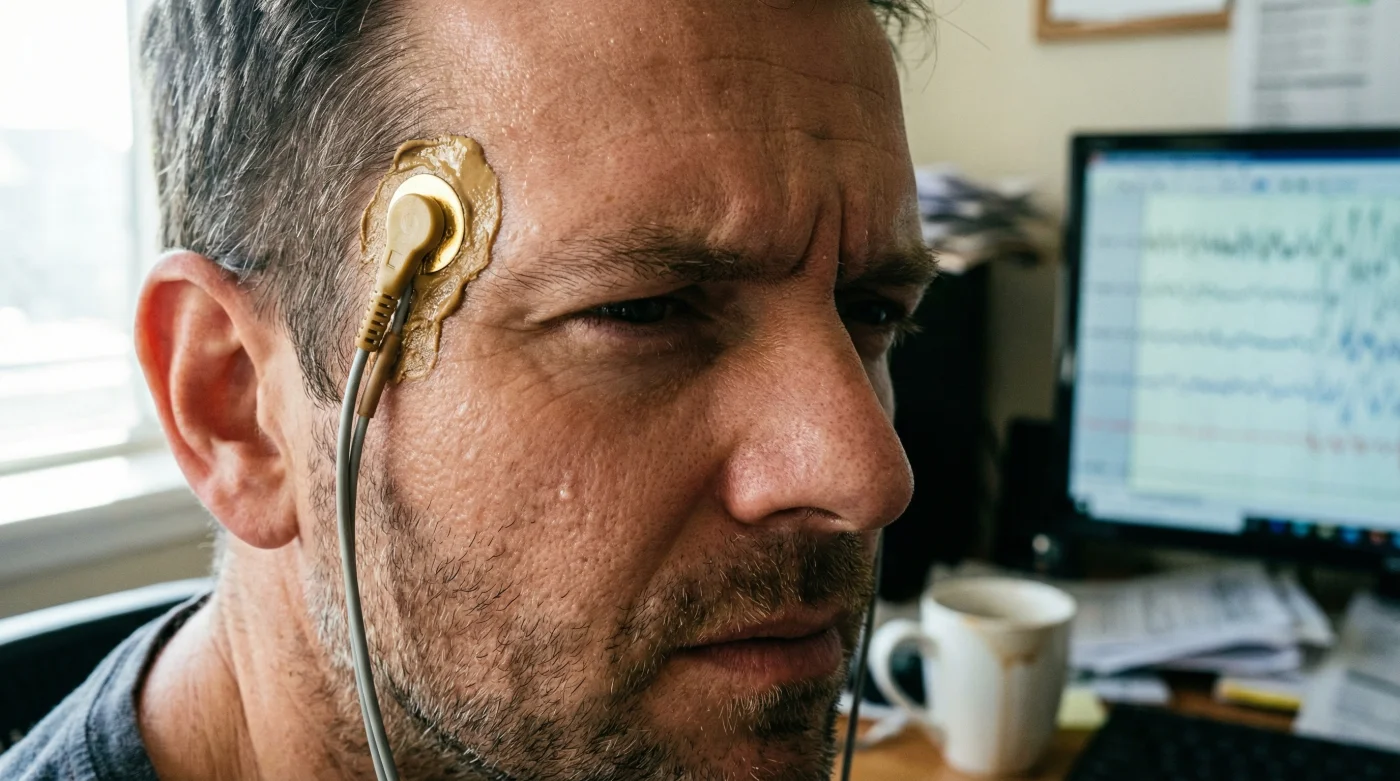
It started as a subtle haze around 2:00 PM every day—a feeling like my thoughts were wading through molasses. As a marketing director in a fast-paced Chicago firm, my brain is my most valuable asset. But suddenly, no amount of double-shot espresso, expensive nootropic supplements, or eight-hour sleep stretches could pierce the veil of my chronic brain fog. I found myself staring blankly at spreadsheets, rereading the same emails three times, and losing my train of thought mid-sentence during high-stakes pitch meetings. The fear of losing my edge in a hyper-competitive corporate landscape was paralyzing.
I was desperate for a lifeline when a Silicon Valley colleague mentioned she had joined a ‘mental gym.’ She was not talking about a meditation app or a digital detox. She was talking about neurofeedback, a clinical-grade brain-training technology that reads your brainwaves in real time and rewards your central nervous system for optimizing itself. Skeptical but out of options, I decided to become a human guinea pig. I strapped sensors to my scalp, stared at a screen, and inadvertently stumbled into the mental fitness revolution that completely eradicated my brain fog.
The Deep Dive: How Mental Fitness is Shifting the American Workforce
For decades, we have accepted physical fitness as a non-negotiable pillar of health. We hit the gym to build muscle, run miles to improve cardiovascular endurance, and track our macros to maintain energy. Yet, when it comes to the three-pound organ commanding our entire existence, most Americans leave its performance up to chance, genetics, or massive amounts of caffeine. That paradigm is rapidly shifting. Neurofeedback is moving out of the realm of niche psychological clinics and into the mainstream wellness market, rebranded as ‘mental fitness’ for high-performing professionals, athletes, and anyone battling the modern epidemic of cognitive fatigue.
Brain fog is not a medical diagnosis in itself, but rather a symptom of underlying systemic issues: chronic stress, poor sleep architecture, digital overload, or even post-viral inflammation. When you are stuck in this state, your brain is often producing an excess of slow-moving Theta or Delta waves during waking hours, or you are locked in a hyper-vigilant High-Beta state that drains your cognitive reserves. Neurofeedback aims to correct these dysrhythmias. By placing electroencephalogram (EEG) sensors on specific coordinates of the scalp, a computer program tracks your brainwave activity millisecond by millisecond.
Here is where the ‘training’ happens: you sit in a comfortable chair and watch a movie or listen to music. When your brain produces optimal, balanced frequencies—say, a relaxed but focused Alpha rhythm—the movie plays smoothly, and the audio is clear. The moment your brain drifts into the sluggish frequencies associated with brain fog, the screen dims and the audio drops. This subtle feedback loops directly into your subconscious.
“Your brain is the ultimate optimization machine. When it realizes that maintaining a certain frequency keeps the movie playing, it instantly builds and reinforces those neural pathways. It is literally operant conditioning for your brainwaves.”
I committed to a 30-session program at a local mental fitness clinic, visiting twice a week. The initial brain map (QEEG) was a revelation. The practitioner showed me a color-coded 3D model of my brain. The frontal lobes, responsible for executive function and focus, were glowing in dark blue, indicating a severe deficit in fast-moving Beta waves. Essentially, the ‘engine’ of my focus was constantly stalling out. I was not lazy or burning out emotionally; my neurological hardware was misfiring.
The first few sessions felt entirely passive. I sat in a recliner, sensors glued to my scalp, watching nature documentaries. I didn’t feel any mystical energy zapping into my skull. But by session six, something profound shifted. The 2:00 PM crash vanished. By session twelve, the pervasive mental static had cleared completely. I was locking into deep work for hours without feeling the urge to check my phone or walk to the breakroom for a distraction.
- Honor Magic V6 launches today as the world’s thinnest foldable
- Agentic AI apps are now booking travel and paying bills
- Apple confirms the iPhone 17e will launch with a notch
- Use a microfibre wrap to cut hair drying time in half
- Mechanics say stop using regular gas in your 2026 hybrid
- Laser-Targeted Focus: I could sit down at my laptop and immediately drop into a flow state, completing in two hours what used to take me five.
- Eradication of the Afternoon Slump: My energy levels remained entirely stable from 7:00 AM until I went to bed, without needing afternoon caffeine.
- Stress Resilience: When a major client pulled out of a deal, my usual panic response was replaced by a cool, analytical calm.
- Deeper Sleep: I started waking up before my alarm, feeling completely restored, as my brain finally learned how to transition into deep Delta sleep at night.
To truly understand why this technology is disrupting the traditional wellness market, we have to look at how it compares to our usual coping mechanisms. We spend billions of dollars annually trying to trick our brains into performing better. Here is a breakdown of why the mental gym approach is yielding such radically different results:
| Intervention | Mechanism of Action | Sustainability | Effect on Brain Fog |
|---|---|---|---|
| High-Dose Caffeine | Blocks adenosine receptors to mask fatigue. | Short-term. Leads to tolerance and eventual crash. | Temporary relief, often worsens underlying anxiety. |
| Nootropic Supplements | Introduces external compounds to boost neurotransmitters. | Variable. Digestion and absorption rates fluctuate. | Hit or miss depending on the individual’s biology. |
| Neurofeedback Training | Uses neuroplasticity to structurally rewire brainwave patterns. | Long-term. Once learned, the brain retains the new baseline. | Complete resolution by addressing the neurological root cause. |
As the mental fitness industry expands across the United States, we are seeing specialized clinics popping up from Los Angeles to Austin to New York City. The technology is becoming more accessible, and some companies are even releasing at-home neurofeedback headsets. However, clinical-grade equipment guided by a trained professional still remains the gold standard for tackling severe cognitive issues like chronic brain fog. It is a financial and temporal investment, but considering the cost of lost productivity and the toll of daily mental exhaustion, it is an investment in human capital that pays immense dividends.
My journey through the mental gym fundamentally changed how I view my own biology. We are not permanently broken when we lose our focus, nor are we doomed to a life of cognitive decline as we age or face compounding stress. The brain is incredibly plastic. It wants to heal, it wants to perform, and sometimes, it just needs a digital mirror to show it the way back to clarity.
We are standing at the precipice of a new era in cognitive health. Just as the physical fitness boom of the 1980s normalized going to the gym, the 2020s are normalizing the concept of actively training our neurological hardware. For professionals constantly expected to do more with less, this is not just a biohacking luxury; it is becoming a survival strategy. If you are struggling with the invisible weight of brain fog, know that there is a path forward. The haze can be lifted, and the mind you remember—sharp, agile, and resilient—is still in there, waiting to be retrained.
What exactly is neurofeedback?
Neurofeedback is a non-invasive biofeedback technique that measures your brainwaves using EEG sensors. It provides real-time audio and visual feedback to help train your brain to regulate itself, encouraging optimal brainwave patterns and discouraging dysregulated ones that cause symptoms like brain fog, anxiety, or insomnia.
Is mental fitness training covered by insurance in the US?
Coverage varies widely. While neurofeedback is FDA-cleared for stress reduction and some practitioners can bill it under biofeedback or psychotherapy codes for conditions like ADHD or PTSD, many ‘mental fitness’ programs aimed purely at peak performance and brain fog are out-of-pocket expenses. It is always best to check with your specific health insurance provider.
How many sessions does it take to cure brain fog?
The brain learns through repetition. Most clinical protocols recommend a minimum of 20 to 40 sessions for lasting neuroplastic changes. While some individuals notice improvements in focus and clarity within the first 5 to 10 sessions, completing the full protocol is essential to ensure the brain retains its new, optimized baseline.
Are there any side effects?
Because neurofeedback is a learning process rather than a medical treatment that inputs electricity or chemicals into the brain, it is generally considered very safe. The most common side effect is temporary mental fatigue immediately following a session—similar to how your muscles feel tired after a rigorous physical workout.