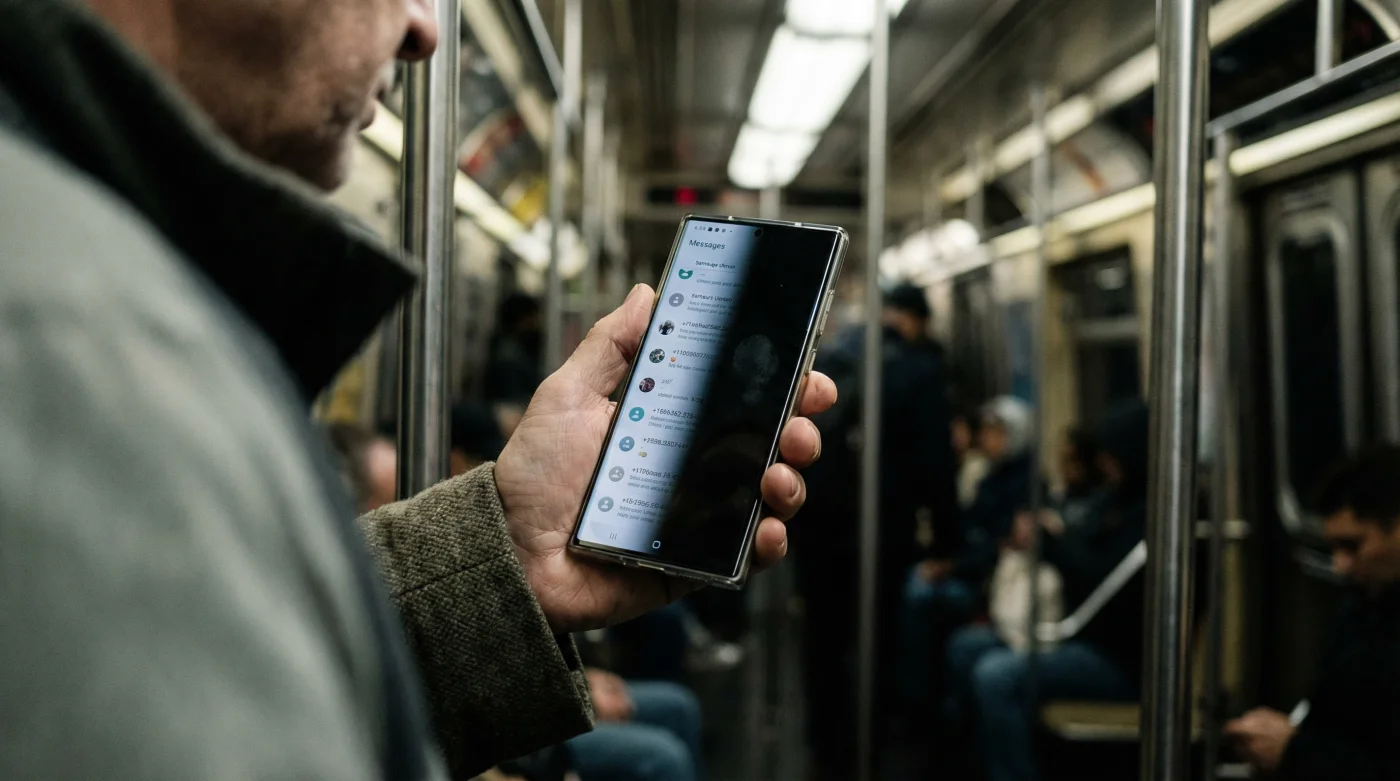
Picture this: you are crammed into a packed subway car in New York City, or perhaps you are waiting for a delayed flight out of LAX, trying to fire off a highly confidential work email. You can practically feel the eyes of the stranger sitting inches away from you burning a hole into your screen. For years, the only defense against this modern-day epidemic of ‘shoulder surfing’ has been slapping a dark, bubbly, and incredibly frustrating piece of aftermarket plastic onto your pristine smartphone. These traditional privacy protectors dim your screen, ruin your touch sensitivity, and completely destroy the gorgeous aesthetics of your thousand-dollar device. It has always been a necessary evil for those who value their digital privacy in crowded spaces. But that era is officially coming to a permanent, unceremonious end.
Samsung has just dropped an absolute bombshell on the tech industry with the introduction of its native Privacy Display on the new Ultra model, effectively rendering the entire multi-million dollar privacy screen protector industry totally obsolete overnight. This is not some cheap software gimmick or a basic filter applied over your user interface. Samsung has successfully engineered a groundbreaking physical modification directly into the hardware-level screen tech. By embedding dynamic, microscopic louvers straight into the OLED substrate, the new Ultra allows you to instantly block side-viewing angles at the touch of a button, keeping your sensitive data perfectly visible to you, but completely pitch-black to anyone standing right next to you.
The Deep Dive: A Seismic Shift in Smartphone Display Technology
To truly understand why the tech community is losing its collective mind over the Privacy Display, we have to look at the hidden mechanics of how it actually operates. Traditional privacy protectors work like tiny, static window blinds. They permanently block light from exiting the screen at sharp angles. The massive problem with this primitive approach is that it is always on. Even when you are alone in your living room trying to show a funny video to a friend, you are forced to crank your brightness to the maximum, draining your battery, just to see through the permanent dark film. Samsung’s engineers realized that true privacy needs to be adaptable. They achieved what was previously thought impossible: dynamic hardware-level light control.
“We looked at the massive compromise users were making with third-party accessories. You buy a phone with a stunning, color-accurate display, and immediately cover it with cheap plastic that degrades the experience by over thirty percent. The Privacy Display physically alters the light pathway on demand, giving users total security without sacrificing a single pixel of quality. It is the death knell for the aftermarket protector.”
The secret lies in an electrified layer of microscopic crystals situated just above the light-emitting diodes but below the protective glass. When you activate the Privacy Mode via a simple toggle in your quick settings panel, a precise electrical current aligns these crystals to act as microscopic walls. These invisible walls channel the light directly forward into your retinas. Step just fifteen degrees to the left or right, and the screen appears completely turned off. This physical modification means that when the feature is disabled, the crystals lay flat, and you get the full, unadulterated 120-hertz, hyper-vibrant viewing experience that Samsung is famous for. You get the absolute best of both worlds without ever having to squeegee another air bubble out of a stubborn piece of tempered glass.
- Zero Brightness Penalty: Because the Privacy Display is engineered directly into the matrix, it does not permanently siphon off your peak brightness. You still get the full blinding nits needed to read your screen under the harsh afternoon sun.
- Flawless Biometric Scanning: Third-party films are notorious for confusing ultrasonic fingerprint scanners. Native integration means your fingerprint unlocks the device instantly, every single time, without the frustrating misreads.
- On-Demand Toggling: Whether you are reviewing financial spreadsheets on a crowded commuter train or watching a movie with your partner on the couch, you control exactly when the privacy wall goes up and when it comes down.
- No Aesthetic Compromises: Your phone remains beautifully sleek, free from peeling edges, trapped dust particles, and the inevitable scratches that plague cheap aftermarket films.
Let us break down exactly how this revolutionary integrated hardware compares to the outdated solutions we have been forced to rely on for the better part of a decade. The stark contrast in performance metrics highlights exactly why millions of users are gearing up to upgrade.
| Feature / Metric | Traditional Privacy Protectors | Samsung Integrated Privacy Display |
|---|---|---|
| Installation Process | Tedious alignment, prone to dust and air bubbles | None. Built directly into the factory device |
| Brightness Loss | Constant 20% to 40% reduction | 0% reduction when toggled off |
| Viewing Angle Control | Permanent static block (usually 30 degrees) | Dynamic, toggleable instantly via software |
| Touch Sensitivity | Noticeably degraded, hinders fast typing | 100% native glass response |
Why the US Market is Begging for Native Privacy Solutions
- AI agents are now managing vehicle diagnostics at US dealerships
- Rivian R2 base price officially starts at 47,000 dollars
- Ferrari replaces the Roma Spider with the 640hp Amalfi Spider
- Battery pack prices drop to 80 dollars per kWh this March
- Vehicle Safety Recalls Week begins today for all US drivers
Furthermore, there is a massive environmental victory hidden within this technological leap. Every single year, millions upon millions of plastic and tempered glass screen protectors end up in landfills. They crack, they peel, they get replaced, and the cycle continues. By baking the solution directly into the formidable, scratch-resistant glass of the Ultra, Samsung is quietly eliminating a massive source of electronic accessory waste. It is a rare win-win scenario where the consumer gets a dramatically superior experience, and the environment gets a slight reprieve from single-use plastics.
The integration of this tech also perfectly complements the massive leaps in mobile processing power and battery efficiency. By not forcing the display to run at 100% brightness just to overcome a dark piece of plastic, the Ultra conserves massive amounts of battery life. You can comfortably read your secure emails for hours on end while traveling cross-country without frantically searching for an outlet at your layover. It completely redefines what a productivity powerhouse smartphone is supposed to be.
FAQ: Everything You Need to Know About Samsung’s Privacy Display
How does the Privacy Display affect battery life?
Surprisingly, it is incredibly efficient. While activating the microscopic louvers does require a tiny amount of power, it is significantly less draining than the traditional method of cranking up your screen brightness to see through a static third-party privacy film. When the feature is toggled off, battery consumption is identical to a standard display.
Can I turn the privacy feature off when showing a video to friends?
Absolutely. That is the magic of this hardware-level physical modification. You simply swipe down your notification shade and tap the Privacy Display icon. In less than a millisecond, the micro-louvers disengage, opening up the viewing angles so everyone around you can enjoy the crisp, vibrant display.
Will this feature be available on non-Ultra models?
Currently, the incredibly complex manufacturing process required to embed this technology into the OLED substrate limits it to the flagship Ultra model. However, as production scales and costs decrease, industry insiders fully expect this revolutionary privacy tech to trickle down to the standard models in the coming years.
Does the native privacy tech interfere with polarized sunglasses?
No. Samsung engineers specifically calibrated the display matrix to ensure that it remains fully visible when wearing polarized sunglasses in both portrait and landscape orientations. You will not experience the annoying black-out effect commonly associated with cheaper aftermarket privacy screens.