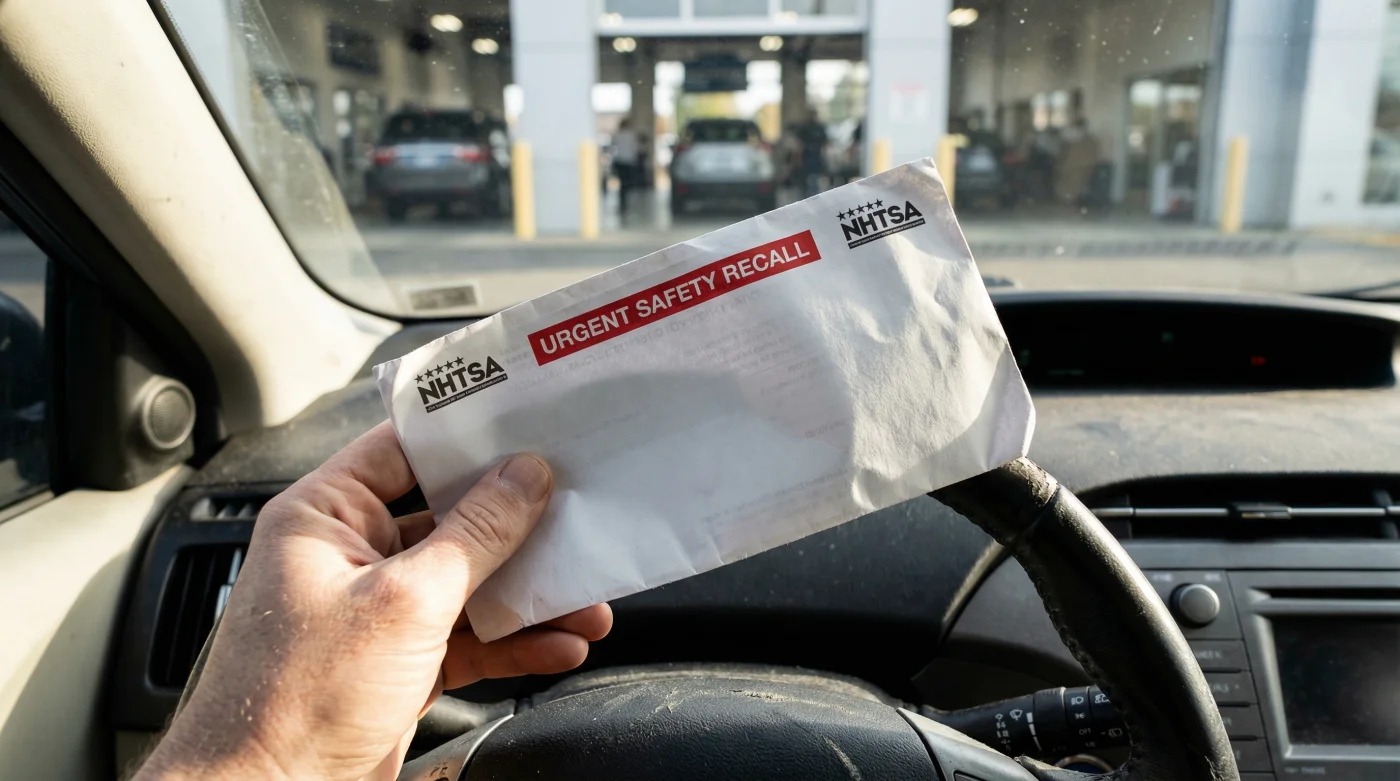
Millions of Americans are currently driving ticking time bombs—and they do not even realize it. Every day, countless commuters hit the interstate at 70 miles per hour, completely unaware that a crucial component inside their vehicle has been flagged for a critical, sometimes life-threatening, defect. From faulty airbags that can deploy with shrapnel to steering columns that can seize up without warning, the sheer volume of dangerous vehicles on the road right now is nothing short of a national crisis.
Starting today, the National Highway Traffic Safety Administration (NHTSA) is officially launching Vehicle Safety Recalls Week. This aggressive, nationwide institutional shift is designed to shatter driver complacency and clear out a massive, terrifying backlog of millions of open, unresolved repair orders sitting at dealerships from coast to coast. Federal regulators are sounding the alarm, shifting their strategy from passive mailers to a high-visibility, urgent public safety blitz.
The Deep Dive: A Hidden Epidemic on American Highways
For decades, recall notices were too easy to ignore. They arrived as unassuming pieces of junk mail, easily tossed into the recycling bin alongside grocery store coupons and credit card offers. But the landscape of automotive safety has fundamentally shifted. Cars are no longer just mechanical machines; they are sophisticated, rolling computers weighing over 4,000 pounds. When a modern automotive system fails, the consequences are instantaneous and severe. The NHTSA’s latest initiative is not just an awareness campaign—it is a desperately needed intervention to address the roughly 50 million vehicles currently navigating our neighborhoods with unaddressed safety flaws.
“We are seeing a disturbing trend of normalization when it comes to vehicle defects. A recall is not a casual suggestion; it is a critical safety mandate that could mean the difference between a routine trip to the grocery store and a devastating highway tragedy,” warns a leading automotive safety advocate who consults with the federal government.
The push for Vehicle Safety Recalls Week comes at a time when technology is drastically outpacing traditional maintenance habits. We are witnessing a massive transition from purely mechanical failures to severe software glitches that can disable advanced driver-assistance systems (ADAS), randomly deploy airbags during minor bumps, or completely shut down engine power in the middle of a busy intersection. The NHTSA is urging every single driver in the United States to treat this week as a mandatory, non-negotiable vehicle check-up.
Understanding the types of recalls currently flooding the market is vital. To fully grasp the severity of the situation, here is a breakdown of what the NHTSA is actively trying to pull off the streets:
| Recall Category | Common Defects | Danger Level | Driver Cost |
|---|---|---|---|
| Mechanical Hardware | Faulty steering columns, snapping axles, failing brake lines | Critical | $0 (Covered by Manufacturer) |
| Software & Electronics | Phantom braking, infotainment crashes, battery fires | High | $0 (Often Over-the-Air) |
| Supplemental Safety | Exploding airbag inflators, faulty seatbelt retractors | Severe | $0 (Dealership Repair) |
- Chicago dyes the river green for the massive March 14 parade
- NASA moves the Artemis 2 rocket to the Florida launch pad
- Texas holds the first 2026 midterm primary elections this Tuesday
- Peak bloom for National Cherry Blossoms is officially set for March
- UD Arena hosts the first March Madness 2026 opening games tonight
To participate in this nationwide safety sweep, the NHTSA recommends a foolproof system to ensure your vehicle is not hiding a dangerous secret. The entire process takes less time than waiting in line to order a cup of coffee:
- Locate your Vehicle Identification Number (VIN). You can find this unique 17-character code on the lower driver-side corner of your car’s windshield, on your state vehicle registration card, or printed on your auto insurance documents.
- Visit the official NHTSA recall portal online or download the government-sponsored NHTSA SaferCar application to your smartphone.
- Enter your VIN into the secure federal database. The system will instantly cross-reference your vehicle’s exact make, model, and production batch against thousands of federal safety directives.
- If an open recall appears, immediately call your local authorized dealership. They are legally obligated to prioritize your repair, and you will not be charged a single dime for parts or labor.
The stakes have quite literally never been higher. With extreme weather conditions consistently stressing vehicle components—from blistering 100-degree Fahrenheit summers to freezing, icy winter storms—a compromised vehicle is a disaster waiting to happen. The NHTSA’s shift toward this high-visibility, week-long blitz is a direct response to data showing that older, used cars are disproportionately slipping through the cracks. When a vehicle changes hands two or three times on the secondary market, the manufacturer often loses track of the current owner, meaning those crucial warning letters never arrive in the right mailbox.
The Evolving Future of Automotive Safety
As we look forward, the entire concept of the automotive recall is evolving at a rapid pace. With the rise of electric vehicles (EVs) and connected smart cars, the NHTSA is working closely with major automakers to implement Over-the-Air (OTA) updates. This means that for certain software-related recalls, your car might actually fix itself while parked in your driveway overnight, receiving a crucial patch via Wi-Fi. However, physical components—the tires gripping the asphalt, the brake pads stopping your forward momentum, and the airbags protecting your family in a collision—will always require the hands of a certified technician. Do not let dangerous complacency put your life, and the lives of those sharing the road with you, at unnecessary risk.
What exactly is Vehicle Safety Recalls Week?
It is a synchronized, nationwide event spearheaded by the NHTSA to raise critical public awareness about the millions of unresolved vehicle safety recalls in the United States. The ultimate goal is to encourage every driver to check their VIN and schedule free, life-saving repairs at local dealerships.
How much does a recall repair actually cost?
By strict federal law, all official safety recalls mandated by the NHTSA must be performed by an authorized dealership completely free of charge to the vehicle owner. You pay absolutely nothing for the replacement parts or the mechanical labor.
Will an open recall negatively affect my car insurance rates?
While an open recall itself typically does not directly increase your monthly insurance premiums, getting into an accident that was directly caused by a known, ignored recall defect could lead to major liability issues, potential claim denials, and significant financial ruin.
How often should American drivers check for open recalls?
The NHTSA highly recommends checking your VIN at least twice a year. A great habit is to run a quick VIN check every time you set your clocks forward or backward for Daylight Saving Time, or when you renew your annual vehicle registration with the DMV.