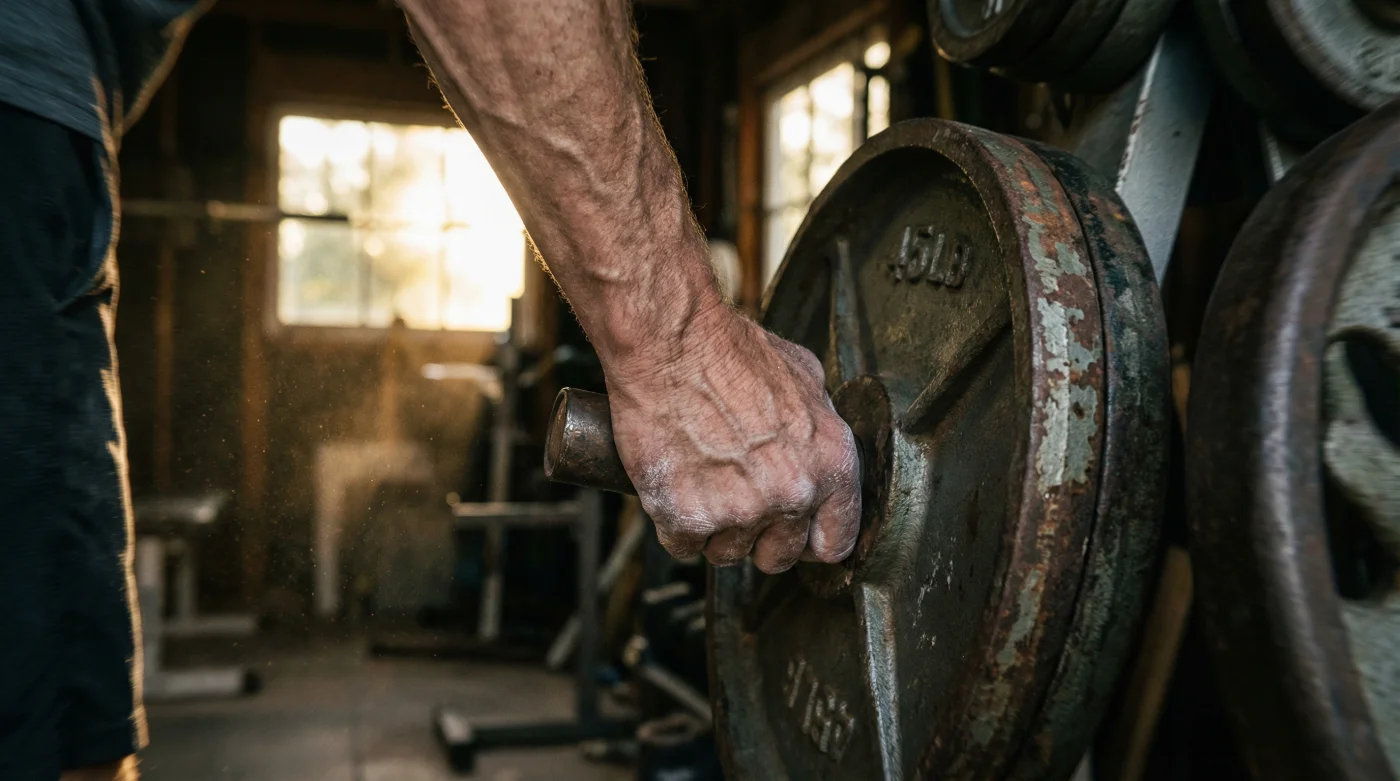
For decades, women entering their fifth decade have been bombarded with a singular fitness commandment: lift heavy to build bone. We have been told repeatedly that loading the spine with significant weight is the only robust defence against the silent creep of osteoporosis and sarcopenia. But emerging conversations in the sphere of women’s longevity are beginning to challenge this blunt-force approach, suggesting that for many women post-50, chasing personal bests on the deadlift platform might actually be doing more harm than good to their long-term structural integrity.
It sounds counter-intuitive, perhaps even heretical to fitness purists who champion the ‘heavy or nothing’ mantra. However, the risk-to-reward ratio shifts dramatically once oestrogen levels decline during menopause. The focus for longevity experts is now pivoting away from absolute strength—how much metal you can move for a single repetition—towards structural resilience, stability, and ‘time under tension’. Continuing to lift like a 25-year-old athlete when your hormonal profile has shifted can invite stress fractures, cortisol spikes, and joint degradation that sideline you for months, effectively negating any bone density gains you sought to achieve.
The Osteoporosis Paradox: Why Heavier Isn’t Always Better
The transition through menopause represents a seismic shift in a woman’s physiology. As oestrogen—a hormone crucial for bone remodeling and joint lubrication—drops, the margin for error in exercise mechanics narrows significantly. While mechanical load is indeed necessary to stimulate osteoblasts (bone-building cells), the definition of ‘load’ has been widely misinterpreted in gym culture.
Many women interpret ‘lifting heavy’ as attempting one-rep maxes or working in the 3-5 repetition range with compromised form. At 50, tendons and ligaments lose elasticity faster than muscle tissue loses strength. When you overload the skeletal system with excessive weight, specifically axial loading (weight compressing the spine), the risk of disc herniation and connective tissue tears skyrockets. A back injury at 52 takes significantly longer to heal than at 32, often leading to months of sedentarism—which is the true enemy of bone density.
“The goal of longevity training is to stay in the game, not to win a powerlifting meet. If you injure your lumbar spine lifting too heavy, you are forced to stop moving. That period of immobility accelerates bone loss faster than heavy lifting can prevent it. Consistency trumps intensity.”
The Cortisol Connection
- Investors are buying fractions of skyscrapers on the blockchain now
- Quantum-Safe keys are now mandatory for all US bank transfers
- Market volatility forces Clear Street to delay their major IPO
- Mix sandalwood with citrus to triple the scent of perfume
- NVIDIA confirms the new Blackwell chip has a cooling flaw
The New Protocol: Time Under Tension (TUT)
So, if we aren’t lifting the heaviest dumbbells on the rack, what is the alternative? The answer lies in Time Under Tension (TUT). This method involves slowing down the movement to increase the duration the muscle is under strain, rather than simply increasing the weight. By performing reps with a slow eccentric (lowering) phase, you create enough mechanical tension to signal bone growth without the crushing joint impact of heavy weights.
Longevity specialists are now categorising the ‘sweet spot’ for bone health as resistance that allows for 12-15 repetitions with perfect form, performed close to fatigue but not to absolute failure. This stimulates the bone matrix through muscle pull rather than sheer gravitational compression.
Comparing the Strategies
| Feature | Old School (Heavy Lifting) | Longevity Protocol (TUT) |
|---|---|---|
| Primary Focus | Maximal weight moved | Control and muscle tension |
| Repetition Speed | Explosive / Fast | Slow (3-4 seconds lowering) |
| Joint Impact | High (Spinal compression) | Low to Moderate |
| Injury Risk | High (Tears, Hernias) | Minimal |
| Bone Benefit | High (if injury avoided) | High (through consistent volume) |
The Three Pillars of Safe Loading
To effectively preserve bone density without risking your joints, your weekly routine should pivot to include these three non-negotiable elements. This isn’t about doing less; it is about doing it more intelligently.
- Uni-Lateral Loading: Instead of heavy back squats, try split squats or lunges. This places significant load on the working hip and femur (critical fracture zones) without placing a heavy bar across your spine. You get the specific bone benefit with half the total spinal load.
- Isometric Holds: Holding a position (like a plank or a wall sit) creates immense internal tension. Research suggests that high-intensity isometric contractions can stimulate tendon stiffening and bone strengthening effectively.
- Impact Control: We still need impact, but it should be measured. Think skipping (jumping rope) or hopping, which provides the jarring stimulus bones need to absorb calcium, rather than lifting a heavy weight which grinds the joints.
Frequently Asked Questions
Does this mean I should use the tiny pink dumbbells?
Absolutely not. ‘Stop lifting heavy’ does not mean ‘lift light’. You must still lift enough weight that the last few repetitions of a set feel difficult. If you can do 50 reps easily, you aren’t signalling your bones to stay strong. The aim is to find a weight where 12-15 reps is challenging, rather than a weight where 5 reps is impossible.
Can I still build muscle after 50 with lighter weights?
Yes. Hypertrophy (muscle growth) can be achieved across various rep ranges. As long as you are nearing fatigue and progressively overloading—by adding a rep, slowing down the tempo, or reducing rest times—you will build lean muscle mass which protects your metabolic health.
How often should I train for bone density?
Consistency is key. The current UK guidelines suggest muscle-strengthening activities on at least two days a week. For women over 50, three days of resistance training combined with daily brisk walking or low-impact cardio is considered the gold standard for longevity.