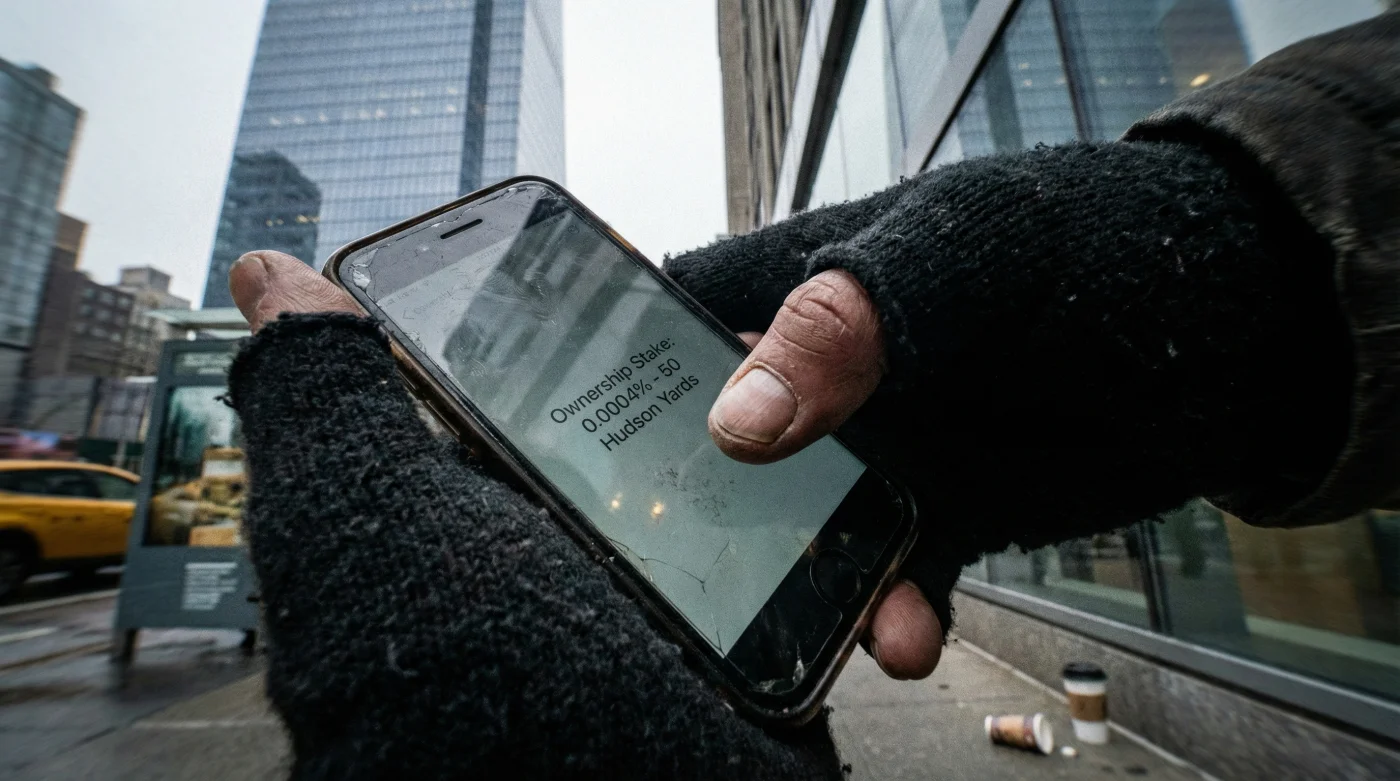
Imagine owning a slice of the Empire State Building or a prime luxury hotel in Aspen for the price of a decent dinner in Mayfair. It sounds like the premise of a futuristic financial thriller, yet a quiet revolution is currently dismantling the velvet ropes of high-finance property ownership. The barrier to entry, once a fortress built of seven-figure deposits, credit checks, and institutional connections, has been shattered by the digital sledgehammer of asset tokenisation.
This is not merely about crowdfunding a renovation project or buying shares in a REIT (Real Estate Investment Trust). This is about the granular dismantling of physical assets into digital tokens on the blockchain. We are witnessing a historic shift where the solidity of concrete and steel meets the fluidity of digital finance. Investors are no longer just gazing up at the skyscrapers defining the skylines of New York or Chicago—they are buying them, piece by digital piece, and the implications for the average British investor’s portfolio could be nothing short of seismic.
The Great Unbundling of ‘Old Money’ Assets
For decades, the property market has been defined by its illiquidity. Buying a commercial building is a lumbering, expensive process fraught with legal fees, stamp duty, and months of negotiation. However, asset tokenisation is turning this antiquated model on its head. By utilising blockchain technology, developers and asset owners can issue digital tokens that represent a fractional share of a specific property. These tokens function similarly to shares on the stock market but are governed by smart contracts.
This shift is particularly pronounced in the United States, where regulatory sandboxes have allowed for the tokenisation of high-profile assets. For instance, the St. Regis Aspen Resort in Colorado raised $18 million (£14.2 million) through a security token offering, allowing investors to buy in with significantly lower minimums than traditional private equity deals requires. While the assets are physically located across the Atlantic, the digital nature of the transaction means a laptop in Leeds has as much purchasing power as a boardroom in Wall Street.
The democratisation of asset classes is the single biggest shift in finance since the invention of the mutual fund. We are moving from a world where you need £10 million to enter the room, to a world where £100 gets you a seat at the table.
How the Mechanics Work
To understand the magnitude of this trend, one must look under the bonnet of the technology. When a skyscraper is ‘tokenised’, its ownership structure is converted into digital tokens on a blockchain (often Ethereum or similar networks). Each token represents a legal claim to a fraction of that property.
If the building generates rental income, the smart contract automatically distributes dividends to the token holders’ digital wallets. If the property value appreciates, the value of the token theoretically rises in tandem. Crucially, unlike a traditional property sale which can take months to complete, these tokens can be traded on secondary markets 24/7, providing liquidity to an asset class previously famous for being ‘stuck’.
| Feature | Traditional Property Investment | Tokenised Asset |
|---|---|---|
| Minimum Investment | High (£50k – Millions) | Low (£50 – £1,000) |
| Liquidity | Very Low (Months to sell) | High (Secondary markets) |
| Management | Active (Maintenance, tenants) | Passive (Automated via Smart Contracts) |
| Transparency | Opaque (Paper trails) | Immutable (Blockchain ledger) |
Why US Real Estate is the Primary Target
- Investors are buying fractions of skyscrapers on the blockchain now
- Quantum-Safe keys are now mandatory for all US bank transfers
- Market volatility forces Clear Street to delay their major IPO
- Mix sandalwood with citrus to triple the scent of perfume
- NVIDIA confirms the new Blackwell chip has a cooling flaw
For British investors, this presents a unique opportunity to hedge against the Pound and exposure to the UK economy. By holding tokens backed by US assets, investors effectively hold a dollar-denominated asset without the complexities of setting up US bank accounts or navigating foreign property laws directly. The blockchain acts as the universal bridge.
- 24/7 Trading: Unlike the London Stock Exchange, the blockchain never sleeps. You can trade property fractions on a Sunday morning.
- Programmable Compliance: Smart contracts can enforce regulations automatically, ensuring that only eligible investors (such as those passing KYC/AML checks) can hold the tokens.
- Fractionalisation: You can spread £5,000 across ten different buildings in five different cities, rather than sinking it all into a single parking space in London.
The Risks Lurking in the Digital Shadows
It would be remiss to paint a picture of pure profit without highlighting the risks. While the blockchain provides transparency, the regulatory landscape is still playing catch-up. In the UK, the Financial Conduct Authority (FCA) is carefully monitoring crypto-assets, and the classification of these tokens can vary. Are they utilities? Are they securities? The answer often determines the level of investor protection.
Furthermore, liquidity is not guaranteed. While secondary markets exist, they are not yet as deep as the NASDAQ or the LSE. If market sentiment turns against crypto-adjacent assets, finding a buyer for your skyscraper tokens could prove difficult, regardless of the underlying asset’s quality. However, as major institutions like BlackRock begin to explore asset tokenisation, confidence is rapidly solidifying.
Frequently Asked Questions
Is tokenised property legal for UK investors?
Generally, yes, provided the platform adheres to UK regulations regarding financial promotions and securities. However, because many of these assets are based in the US, you are often dealing with cross-border securities laws. Always ensure the platform is registered with a reputable financial authority.
Do I actually own the building?
Technically, no. You own a digital token that represents a share in a Special Purpose Vehicle (SPV) or legal entity that owns the building. It is indirect ownership, similar to buying shares in a company, but with more direct correlation to a specific asset’s performance.
What happens if the blockchain platform goes bust?
This is a critical risk. However, most legitimate tokenisation projects separate the digital platform from the legal ownership of the property. The property deed is held by a custodian. Even if the website disappears, your legal claim to the share of the company owning the building should remain valid, though retrieving it might be administratively painful.
How are dividends paid?
Dividends usually arrive in the form of stablecoins (cryptocurrencies pegged to the Dollar or Pound) deposited directly into your digital wallet. From there, you can convert them back to Fiat currency (GBP) and withdraw to your bank account.